Middle East tanker strikes test oil price stability and Bitcoin market outlook
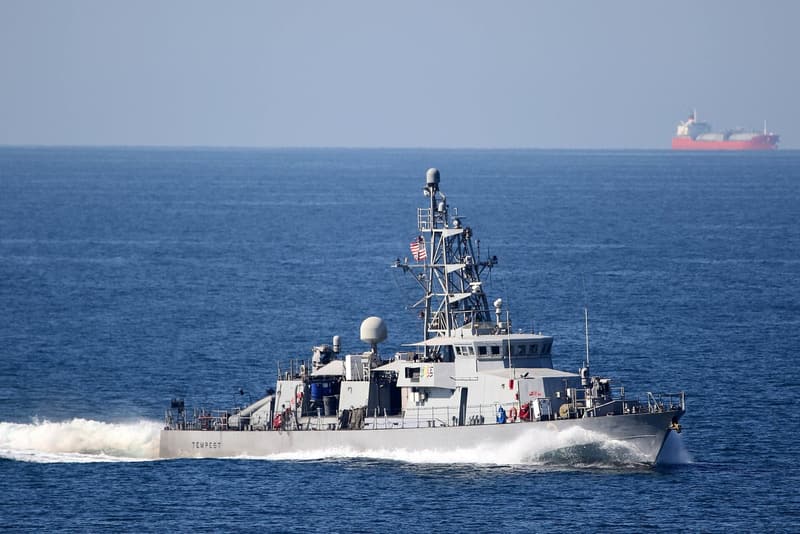
Representative photo · Photo: Official U.S. Navy Page from United Stat / Wikimedia Commons, Public domain
Recent projectile strikes on two oil tankers near the Strait of Hormuz have created uncertainty in energy markets, potentially impacting Bitcoin and broader interest rate expectations.
This is news, not investment advice. NexVani Media is not a SEBI-registered investment adviser and does not recommend buying or selling any security. Do your own research or consult a registered adviser before investing.
The UK Maritime Trade Operations (UKMTO) reported two separate incidents involving tanker strikes near the Strait of Hormuz on Saturday. In the first event, a projectile struck the stern of an outbound tanker near Khasab, Oman, at 5 a.m. UTC. Less than an hour later, a second warning confirmed that another vessel was hit in its engine room. While no casualties were reported, the incidents have introduced new volatility into energy markets, raising questions about how the situation might influence the price of Bitcoin and global economic conditions.
Recent declines in Brent crude prices had been attributed to recovering shipment volumes from the Gulf. Data from the US Energy Information Administration indicated that as of November 18, Brent spot prices were significantly lower than the October average of $124 per barrel. However, the latest security incidents threaten to disrupt this downward trend. For investors tracking the relationship between bitcoin middle east market dynamics and inflation, the stability of crude prices remains a critical indicator. If oil prices rebound significantly, it could exert upward pressure on US inflation and influence Federal Reserve interest-rate expectations.
Recent tanker strikes in the Middle East threaten to reverse oil price declines and affect crypto market risk.
Market implications and rate expectations
Financial markets were already navigating a complex landscape prior to the strikes. Treasury data showed the two-year yield had fallen to 4.63% from 4.76% by Thursday, while Brent futures settled at $92.57 on Friday. Market participants have been closely monitoring the likelihood of a December rate hike, with CME FedWatch data citing a 96% probability of a quarter-point increase.
Analysts have noted that oil prices often feed into core inflation models, particularly in advanced economies. An IMF working paper from 2023 suggested that tighter US monetary policy has historically weighed on broad crypto prices as investors shift away from risk-heavy assets. If the recent strikes lead to a sustained drop in outbound shipments and a rebound in Brent futures, it could reinforce the case for higher borrowing costs. Conversely, if shipping volumes remain consistent and rate expectations stay stable, the impact on risk appetite for digital assets may be limited.
Why it matters
The reported strikes affect energy supply chains and global inflation sentiment. For investors and market observers, the situation highlights how geopolitical tensions in vital shipping lanes can quickly shift the macroeconomic outlook, influencing interest rate projections and the risk appetite for assets like Bitcoin.
This development serves as a reminder of the interconnected nature of global commodity flows and financial markets. Traders are now watching whether shipping volumes recover or if the incidents lead to a prolonged period of market uncertainty.
Sources
More like this
Bitcoin Price Slips Below $60,000 as December Fed Meeting Nears

Leveraged Funds Cut Bitcoin Shorts by 79% Before Recent Market Decline

South Korean exchanges halt CYBER transfers amid suspected bridge exploit