India Equity Fund Inflows Fall 14% in October
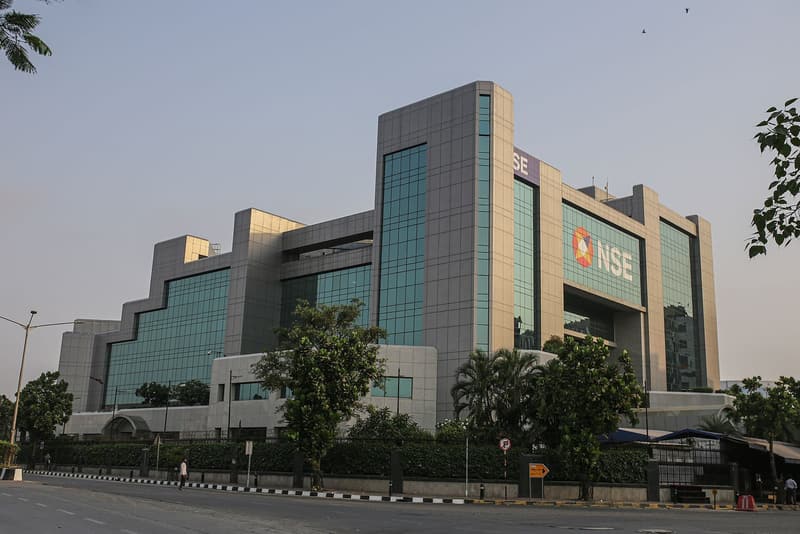
Representative photo · Photo: 312user / Wikimedia Commons, CC BY-SA 4.0
Inflows into Indian equity mutual funds declined to 33,000 crore rupees in October as investors grew cautious amid market volatility.
This is news, not investment advice. NexVani Media is not a SEBI-registered investment adviser and does not recommend buying or selling any security. Do your own research or consult a registered adviser before investing.
Inflows into equity mutual funds in India slowed during October as participants displayed heightened caution regarding riskier segments of the financial market, leading to reduced exposure toward smaller businesses. According to figures published by the Association of Mutual Funds in India, equity schemes brought in a net 33,000 crore rupees, which is approximately 3.5 billion dollars, representing a fourteen percent decrease from the 38,310 crore rupees recorded in September. Mutual funds aggregate capital from individual investors and deploy it across various assets, establishing themselves as a significant pillar within the india equity market by offering steady domestic purchasing power that balances out ongoing foreign capital outflows.
This moderation in investment velocity transpired alongside a market correction that dragged the National Stock Exchange Nifty 50 Index down to its weakest level since April of 2025 during the early part of the month. Additional pressures stemmed from escalating energy costs driven by conflict in the Middle East, which heightened inflation anxieties, while overseas investors redirected capital toward global regions offering heavier exposure to artificial intelligence opportunities. Consequently, the reduction in capital allocation proved most severe among lower-cap equities. Small-cap funds managed to attract 64.1 billion rupees in October, declining from a record 90.4 billion rupees in September, whereas mid-cap allocations dropped from 78.3 billion rupees down to 48.9 billion rupees.
Equity fund inflows dropped 14% in October as investors moderated exposure to smaller companies.
Conversely, participants favored schemes holding larger corporations, with combined large- and mid-cap funds pulling in 84.8 billion rupees, capturing the highest volume among active equity categories. Nitin Agrawal, chief executive officer of mutual funds at InCred Money, noted that this sector led for the first time in the current cycle, demonstrating that investors are mitigating capitalization risk while remaining fully engaged in equities, adding that the adjustment in small-cap figures was healthy rather than alarming.
Market Performance Divergence
The month also highlighted a growing divergence in asset performance. The Nifty 50 index rebounded from initial losses to close October nearly two percent higher, aided by returning foreign capital as crude oil prices retreated and global technology stocks experienced a sell-off. Meanwhile, the broader index remained constrained, with the Nifty Midcap 100 index losing 3.4 percent and the Nifty Smallcap 250 index sliding 5.8 percent. On the other hand, debt funds experienced a strong rebound, securing 1.13 trillion rupees and thereby offsetting a substantial portion of the 1.83 trillion rupees withdrawn in September.
Why it matters
The cooling of equity fund inflows reflects changing risk appetites among domestic investors in India as they navigate broader market corrections and geopolitical tensions. This shift affects retail participants and fund managers alike, signaling a strategic pivot toward larger, more stable corporations while reducing exposure to high-risk small and mid-sized companies.
Sources
More like this

India's wealthy shift to real assets as stock returns slow down
US AI sell-off impacts Indian stocks: A mint explainer
Stock Market Update: Nifty 50 and Sensex Open Higher Before Diwali