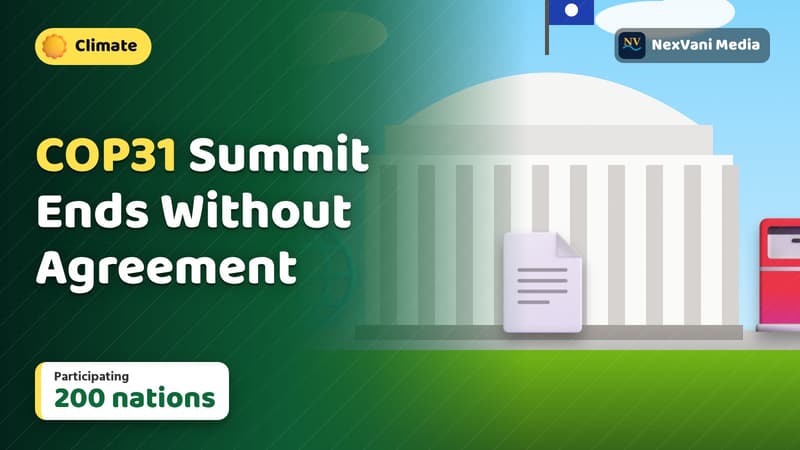
International climate change conference concludes without agreement in Turkey
Illustration: NexVani Media
Delegates from 200 nations failed to reach a consensus at the COP31 summit in Antalya, Turkey, due to deep divisions over the future of fossil fuels.
Global representatives gathered in Antalya, Turkey, for the COP31 summit, marking the latest iteration of the international climate change conference. The event, which brought together delegates from approximately 200 countries, was intended to produce a unified path forward for environmental policy. However, the talks concluded without a formal agreement, leaving the international community without a clear roadmap for future climate action.
The primary point of contention throughout the negotiations centered on the role of fossil fuels. As the main driver of global warming, the transition away from these energy sources remains a deeply divisive issue among participating nations. Despite extensive discussions held in Antalya, delegates were unable to reconcile their conflicting interests regarding the phasing out of coal, oil, and gas production.
The COP31 climate summit ended in failure as nations could not agree on fossil fuel policies.
Stalled progress in Antalya
The inability to reach a consensus highlights the persistent challenges inherent in global climate diplomacy. While the summit was designed to foster cooperation, the lack of a final agreement underscores the difficulty of balancing economic priorities with the urgent need to address the primary drivers of environmental change. With no resolution reached, the future of international climate commitments remains uncertain for the participating countries.
Why it matters
The failure to reach an agreement at COP31 means that global efforts to curb the primary drivers of climate change remain uncoordinated. This outcome impacts all nations, as the lack of a unified policy leaves the international community without a collective strategy to address the ongoing environmental crisis.
For readers in India and South Asia, this development is significant given the region's vulnerability to climate-related shifts. The absence of a global consensus on fossil fuel reduction complicates the transition toward sustainable energy policies for developing economies that rely on these resources for growth.
Sources
More like this

Australia Urged to Reduce Reliance on Imported Fossil Fuels

Cop31 Climate Summit Talks End Without Consensus on Fossil Fuel Deal

New Draft Deal Aims to Avert Collapse of Talks at Climate Summit