Politics
Israel Election Results Show Little Appetite For Change Amid Ongoing War
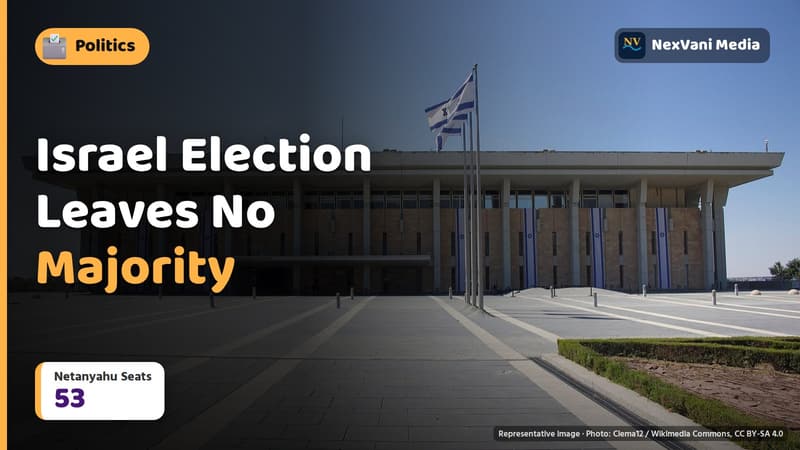
Representative image · Photo: Clema12 / Wikimedia Commons, CC BY-SA 4.0
Representative image · Photo: Clema12 / Wikimedia Commons, CC BY-SA 4.0
Recent election results in Israel reveal that neither major political camp secured a parliamentary majority, as voters focused heavily on internal issues.
The recent israel election results following a high voter turnout show that neither Prime Minister Benjamin Netanyahu’s coalition nor the opposing Zionist alliance secured the 61 seats needed for a parliamentary majority. Netanyahu's group achieved 53 seats, ahead of the opposition bloc, while Arab parties reached 19 seats. Despite massive protests regarding judicial reforms, a corruption trial, and questions over the October 2023 attacks, millions of citizens cast ballots without Gaza or the West Bank appearing as deciding factors.
Campaigns centered largely on domestic concerns such as the power of courts, military exemptions for the ultra-Orthodox minority, and government accountability for security failures. Analysts noted that military occupation and war have become the lens through which security, citizenship, and democracy are viewed by many Israelis over decades. Sociologists pointed to mechanisms of denial rather than a lack of information regarding the devastation in Gaza, where attacks have claimed over 74,500 lives. Meanwhile, experts suggested that support for Netanyahu was driven by a strong campaign of fear and the perception that he represents unmatched security leadership.
The recent election revealed that military occupation and war are deeply embedded in how citizens view security and democracy.
The outcome reflects deep-seated political alignments and sustained public backing for current leadership despite international isolation and economic ripple effects from regional conflicts, including energy market disruptions tied to actions involving Iran.