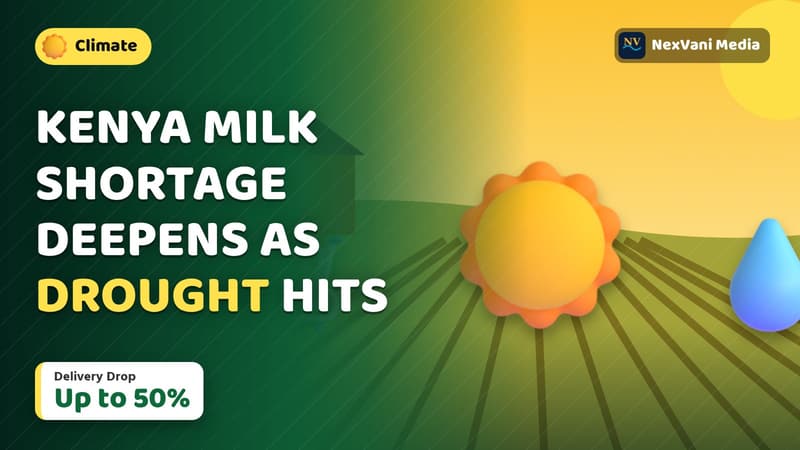
Kenya milk shortage deepens as drought hits production and drives up prices
Illustration: NexVani Media
A prolonged dry spell across Kenya has slashed milk output, emptied supermarket shelves, and forced prices higher as farmers struggle to feed dairy herds.
A severe dry period has intensified a nationwide Kenya milk shortage, disrupting supplies to major towns, emptying supermarket shelves, and pushing prices significantly higher for consumers. Across Nairobi and surrounding regions, finding familiar brands has become difficult, with neighbourhood shops charging up to 100 shillings for a 500ml packet while alternative brands appear at lower rates. Farmers and agricultural officials attribute the supply crisis to scarce pasture and dwindling water supplies that have severely reduced animal productivity.
In Kajiado County, dairy producers reported sharp drops in milk yields over recent months. Local farmers explained that disappearing natural grazing areas have forced them to buy expensive hay and even relocate herds to neighbouring counties. Cooperatives in the region have recorded up to a 50 percent decline in deliveries from members. Meanwhile, hoteliers in Nairobi are spending hours queuing at processor depots for rationed supplies, while expressing concern over the growing presence of questionable powdered milk products.
Agriculture Cabinet Secretary Mutahi Kagwe acknowledged that prolonged dry conditions have severely impacted fodder availability and milk deliveries to processing plants. Although national production figures showed growth between 2021 and 2025, monthly deliveries to formal processors dropped notably in recent months. The government is currently monitoring market prices, facilitating regional dairy transfers within the East African Community, and encouraging processors to increase collections from farmers.
Higher producer prices offer little relief as drought slashes dairy yields and hiking feed costs.
To address long-term challenges, authorities are exploring expanded fodder production, subsidised artificial insemination, and the distribution of milk coolers to farmer groups. Plans are also underway to restructure the state-owned dairy processor New KCC and evaluate a potential proposal to introduce Indian water buffaloes as an alternative milk source.
Why it matters
Farmers are receiving higher payments but are producing far less milk and also face rising prices for hay. This supply crunch directly impacts dairy producers, cooperatives, hospitality businesses, and everyday consumers who depend on steady access to fresh dairy products.
Sources
More like this

Severe Floodwaters Submerge Streets and Parking Lots in Davie, Florida
Torrential Rain Causes Widespread Flooding Across South Florida

California Faces Heavy Rainfall and Snow as Atmospheric River Approaches