
Report labels Australian carbon offsets as phantom forests
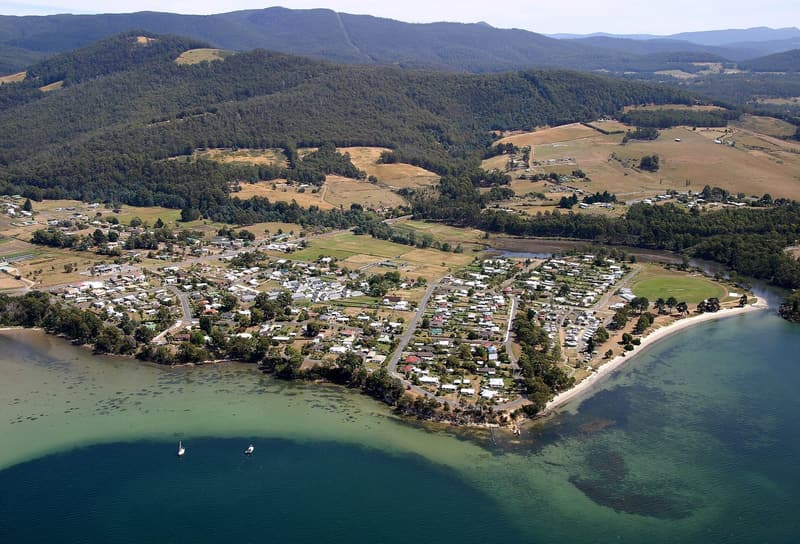
Representative photo · Photo: Daryl Jones (Photographer) / Wikimedia Commons, Public domain
Academics claim forest regeneration projects in Australia are failing to store carbon, potentially undermining national climate policies.
A new report has reignited a fierce debate over the integrity of Australia’s carbon credit system, with researchers describing some regeneration areas as phantom forests. While the term phantom is often associated with pop culture like the Phantom of the Opera, in this context, it refers to arid regions where critics argue that forest regeneration is not occurring as claimed.
A group of academics, including experts from the Australian National University and the University of New South Wales, analyzed 50 forest regeneration projects. Led by Professor Andrew Macintosh, the team concluded that there has been only a minimal increase in tree canopy cover over the past five years, despite favorable wet conditions. The study, published by the Australian Conservation Foundation, suggests that these projects have generated over 60 million carbon credits, valued at up to $2 billion, despite failing to effectively regenerate forests.
Research suggests many forest regeneration projects fail to achieve meaningful carbon sequestration results.
Concerns over phantom forest credits
Professor David Eldridge, a co-author of the report, expressed disbelief that areas in the outback could be credited for forest regrowth, stating that some of these regions are incapable of supporting forests. The findings align with previous peer-reviewed studies suggesting that Australia’s current methodology for creating carbon credits does little to address the climate crisis.
These credits are central to the federal government’s safeguard mechanism, which allows industrial polluters to purchase offsets to meet emissions reduction targets. Critics argue that this system enables companies to continue polluting rather than making direct emissions cuts. The Australian Conservation Foundation has called for a ban on coal and gas companies using these offsets to claim emissions reductions.
However, the industry has strongly rejected these claims. Green Collar, a company managing human-induced regeneration projects, stated that its sites are subject to rigorous scrutiny and are performing as expected. A spokesperson argued that satellite imagery alone is insufficient for measuring carbon, as it does not account for biomass stored in roots, stems, and dead timber. Similarly, Climate Friendly CEO Skye Glenday stated that the criticisms are inconsistent with the scientific and regulatory oversight applied to these projects. The Clean Energy Regulator added that it maintains confidence in its methods and has previously rejected non-compliant projects that could have claimed millions of credits.
Why it matters
The dispute highlights a critical tension between the use of carbon offsets and the need for immediate, direct emissions reductions. If these credits are indeed of low integrity, it could undermine the effectiveness of Australia's climate policy by allowing major polluters to bypass necessary environmental changes, potentially accelerating global tipping points.
Sources
More like this

China and the U.S. Diverge on Climate Action and Emission Reductions

Thailand scrambles for clean water after Myanmar linked arsenic pollution
Environment Agency asks people to share views on blue brook pollution
