Religious Ruling Revives Memories in Israel of Rabin Assassination
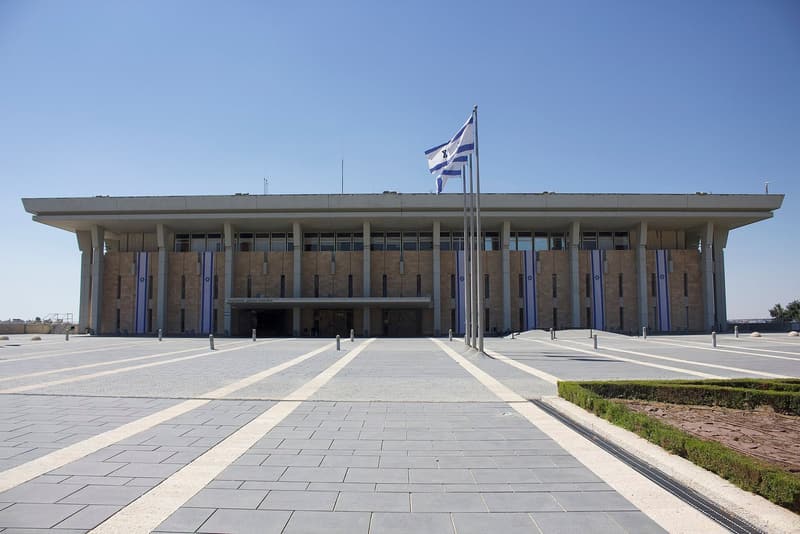
Representative photo · Photo: Clema12 / Wikimedia Commons, CC BY-SA 4.0
A controversial religious ruling invoking the 'law of the pursuer' has sparked fears of political violence in Israel reminiscent of the 1995 assassination of Yitzhak Rabin.
As Israel navigates complex coalition negotiations following recent elections, the national atmosphere has reached a state of extreme tension. The discourse surrounding Religion Israel and the role of faith in political decision-making has become a focal point of public concern, with many observers drawing parallels to the volatile climate that preceded the 1995 assassination of Prime Minister Yitzhak Rabin.
At the center of the controversy is a letter from Rabbi Gedalia Axelrod, a former head of Haifa’s rabbinical court. Axelrod invoked a principle in Jewish religious law known as din rodef, or the “law of the pursuer,” suggesting it could justify the killing of politicians who facilitate a government supported by Arab-led parties. This same legal principle was famously cited by Yigal Amir to justify the murder of Rabin, who had signed the Oslo Accords. Axelrod defended his stance to the news website Walla, stating that he felt obligated by the Torah to make such sacrifices.
A controversial religious ruling invoking the law of the pursuer has sparked widespread fears of political violence.
Concerns over Religious Israel and political stability
The ruling has drawn sharp condemnation from across the political spectrum. Twenty former senior security and military officials have formally requested a criminal investigation into the Rabbi’s remarks. Members of parliament, including Ofer Cassif and Michal Rozin, have also warned that the normalization of such rhetoric increases the risk of violence. The Chabad Hasidic movement, to which Axelrod belongs, has officially distanced itself from his comments.
Sociologist Yehouda Shenhav-Shahrabani describes this trend as “political theology,” where concepts of divine authority and sacred duty are used to shape political life. By framing political opponents as threats to a sacred community, such rhetoric can transform violence into a perceived religious obligation. This environment is further complicated by ongoing coalition talks, where caretaker Prime Minister Benjamin Netanyahu and his allies have frequently vilified Arab-led parties, labeling them as supporters of terror.
Critics argue that the current climate is exacerbated by mainstream political figures who use inflammatory language. Member of parliament Ofer Cassif noted that while extremists were once on the fringe, such views now appear to be gaining traction within the mainstream. Recent incidents, including protests outside the home of opposition leader Gadi Eisenkot, have reinforced these fears, with demonstrators using aggressive and threatening language against political figures.
Why it matters
The escalation of political rhetoric and the invocation of religious law to justify violence poses a significant threat to Israel's democratic stability. This trend affects the safety of elected officials and deepens societal divisions, potentially paralyzing the formation of a functional government.
For international observers, including those in India and South Asia, this situation highlights the dangers of conflating sectarian or religious identity with political legitimacy. The erosion of democratic norms through the use of scapegoating and religious incitement serves as a cautionary tale regarding the fragility of political institutions in polarized societies.
Sources
More like this

Iraqi PM visits Lebanon to discuss new oil export routes
CAIR Defends Civil Rights Work Following Trump’s Remarks on Potential Designation
President Trump Says US Taking Potential Iranian Plot Seriously