Saudi Arabia: Rights groups raise alarm over rising number of executions
Illustration: NexVani Media
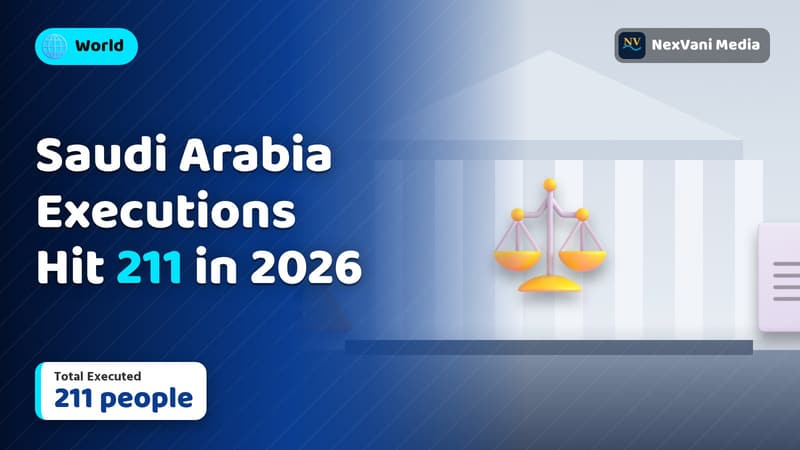
Saudi Arabia has executed 211 people so far in 2026, drawing sharp criticism from human rights organizations over the use of the death penalty and reports of intensifying political repression.
Saudi Arabia continues to carry out executions at a high rate, with recent reports highlighting the deaths of two men in the Eastern Province. Jawad Abdullah Qureiris and Fadel Hassan al-Safwani were executed on Saturday after being convicted of terrorist offenses. Al-Safwani was a known organizer of 2011 protests calling for civil rights, while Qureiris, who was a minor at the time of his participation in protests in Qatif, had previously been identified by the UN Working Group on Arbitrary Detention as a victim of arbitrary detention.
Saudi Arabia news and the death penalty
According to an AFP tally, these latest actions bring the total number of individuals executed in Saudi Arabia in 2026 to 211. This figure includes 126 people convicted of drug-related offenses and 17 executed on terrorism charges. Of those executed, 100 were Saudi nationals, while the remainder were foreign citizens. Human rights organizations have noted that the kingdom ranks among the world's most prolific executioners, following China and Iran. Data from the NGO ECPM indicates that beheading and stoning remain primary methods of execution, though many sentences are issued as discretionary ta'zir rulings, which lack clearly defined legal frameworks.
Saudi Arabia has executed 211 people in 2026 amid concerns over human rights and political repression.
International watchdogs have expressed deep concern regarding the scope of these punishments. Human Rights Watch reported that in July, five Ethiopian migrants were executed for nonviolent drug offenses, and in October, two Bangladeshi nationals were also put to death. Furthermore, reports emerged this week of a Kenyan woman sentenced to 100 lashes for giving birth outside of marriage. Sarah Lea Whitson, a human rights lawyer, stated that these actions demonstrate a continued reliance on harsh repression.
Observers suggest that regional instability, particularly the ongoing conflict involving Iran and the Houthi movement, may be influencing domestic policy. Maryam Aldossari of the organization ALQST noted that authorities appear to be using regional tensions to justify an intensified crackdown, particularly against the country's Shia minority. However, some analysts, such as Neil Quilliam of Chatham House, suggest that while regional tensions heighten national security concerns and reduce tolerance for public criticism, the kingdom continues to balance social reforms with strict political control. The Saudi Human Rights Commission has not yet responded to requests for comment regarding these developments.
Why it matters
The escalation in executions and corporal punishment signals a hardening of domestic policy in Saudi Arabia. This trend affects both the local population and foreign migrant workers, raising significant international human rights concerns regarding the use of the death penalty and the lack of transparency in the legal system.
Sources
More like this
Kyiv Bridges Damaged in Russian Missile Strikes

Three Killed in Piper Comanche Plane Crash at Grand Canyon North Rim

Thousands demand cancellation of Nathan Cofnas talk at Oxford University