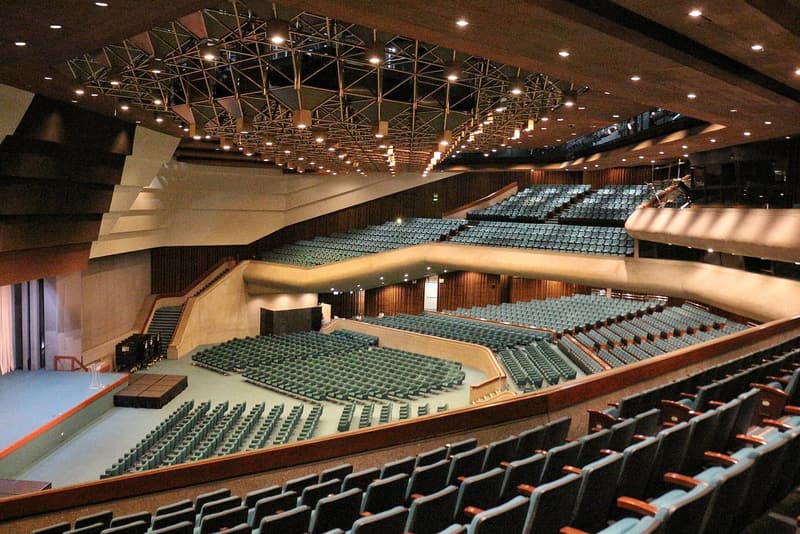
Southeast Asian leaders meet as Trump visit highlights trade disruption
Representative photo · Photo: Brutalist Pilipinas / Wikimedia Commons, CC0
ASEAN leaders gather in Manila for an annual summit as US President Donald Trump visits the region, raising concerns over recent trade tariffs and shifting economic alliances.
Leaders from Southeast Asian countries are convening in Manila, Philippines, for their annual summit, a series of meetings scheduled from Sunday through Tuesday. The event coincides with a high-stakes visit by US President Donald Trump to the Asia-Pacific region, which has drawn significant attention to his administration's recent trade policies and his approach to traditional alliances.
Following a brief stop in Manila where he is expected to meet with Philippine President Ferdinand Marcos Jr., President Trump will travel to Shenzhen, China, for the Asia-Pacific Economic Cooperation (APEC) summit. This trip will include a notable trilateral meeting with Chinese President Xi Jinping and Russian President Vladimir Putin, marking a significant moment in regional diplomacy.
President Trump's visit to Southeast Asia highlights ongoing tensions regarding US trade tariffs and economic policy.
Since July, the Trump administration has imposed tariffs ranging from 10 to 12.5 percent on dozens of trade partners, including many Southeast Asian nations. These measures follow a US Supreme Court ruling that struck down earlier, more aggressive tariff proposals. The Office of the US Trade Representative cited concerns over forced labour as the primary justification for these duties, though further investigations into national security and manufacturing concerns could lead to additional trade barriers.
Navigating trade in Southeast Asia
While Southeast Asian countries have largely managed to weather these trade challenges, experts suggest the future remains uncertain. Deborah Elms of the Hinrich Foundation noted that while regional exports have increased, this growth is heavily reliant on electronics shipments linked to the artificial intelligence sector. If that demand weakens, the regional economy could face significant pressure. Furthermore, Jayant Menon of the ISEAS-Yusof Ishak Institute warned that President Trump retains substantial authority to implement further sectoral tariffs or export controls.
Despite these external pressures, the summit is expected to focus on regional integration. A key anticipated outcome is the signing of the Digital Economy Framework Agreement, an initiative launched in 2023 aimed at facilitating cross-border data transfers and electronic payments. This agreement is viewed as a foundational step toward achieving a $2 trillion digital economy for the bloc by 2030.
However, some analysts remain skeptical about the bloc's ability to deepen internal trade. Professor Phar Kim Beng pointed out that intraregional trade within the bloc remains low at 23 percent, significantly trailing the European Union. He suggested that while leaders will continue to emphasize the importance of regional trade, substantive measures to bridge this gap remain limited.
Why it matters
The summit underscores the delicate balancing act faced by regional leaders as they manage trade relations with the United States and China. The potential for further US tariffs creates economic uncertainty that could impact supply chains and manufacturing across the broader Asia-Pacific region.
Sources
More like this
Sudan Misery Deepens as International Aid Funding Plummets

UN Reports 25 Seafarers Killed in Strait of Hormuz Since US-Israel War on Iran

Missing Australian Boy Found Safe After Six Days in Bushland