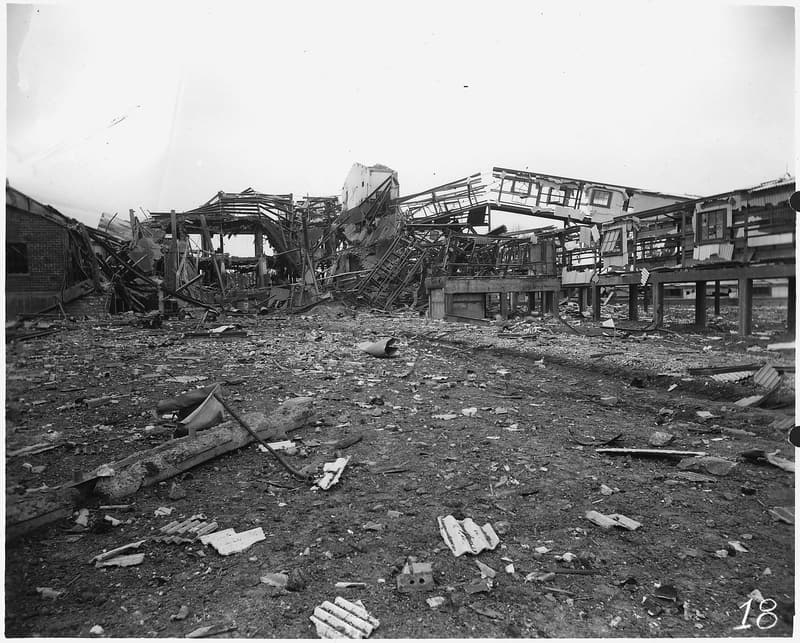
US Army Uses Emergency Rules to Detonate Chemical Waste in Iowa
Representative photo · Photo: Unknown author Unknown author or not pro / Wikimedia Commons, Public domain
The US army is moving forward with plans to detonate degraded bomb-making chemicals in Iowa, bypassing a court order by using emergency provisions.
The US army has announced plans to invoke emergency provisions to bypass a recent court order that temporarily halted the detonation of several tons of bomb-making chemicals in Iowa. Government lawyers filed documents stating that swift action is necessary to protect personnel and nearby communities from escalating risks as colder weather approaches.
The controversy centres around degraded lead azide discovered by staff at the Iowa Army Ammunition Plant in March. The crystallization of this material created an unstable situation, prompting the army to consult specialists. Officials argue that handling the barrels to neutralize the contents through alternative chemical processes would significantly increase the probability of an accidental and fatal explosion. Furthermore, falling temperatures expected to drop below freezing increase the likelihood of an uncontrolled blast.
Environmental groups strongly criticized the manoeuvre, accusing the government of sidestepping judicial oversight and ignoring public safety demands. The Eighth US Circuit Court of Appeals had previously granted a request from environmentalists to put a temporary hold on the EPA-approved permit for the detonation in Middletown. Organizations including the Iowa Environmental Council, the Sierra Club, and Earthjustice argued that alternatives were not given adequate consideration and that transparency was lacking.
The US army is bypassing a court order to detonate unstable bomb-making chemicals in Iowa.
Despite these challenges, government lawyers maintained that federal hazardous waste regulations do not apply during immediate threats to health, safety, or the environment as determined by emergency response specialists. The operation is set to release an air plume containing lead particles that will disperse locally, prompting safety advisories for Middletown residents to remain indoors, keep windows closed, and protect livestock.
Why it matters
This decision highlights the friction between urgent military hazard mitigation and environmental oversight. The choice to proceed with open-air detonation impacts local residents who must follow safety protocols due to potential toxic lead dispersion, while also setting a legal precedent regarding the use of emergency provisions to bypass judicial holds.
Sources
More like this

Mystery of the red stream in Turkiye investigated

COP31 climate summit ends in deadlock over fossil fuel language

COP31 climate summit ends without deal amid deep divisions