Delhi AQI improves to 236 as authorities crack down on pollution
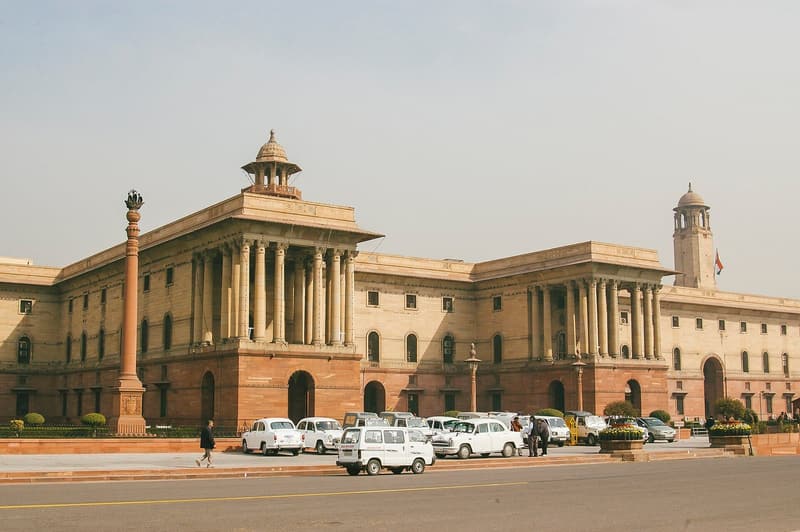
Representative photo · Photo: Matthew T Rader / Wikimedia Commons, CC BY-SA 4.0
Delhi's air quality index improved to 236 on Sunday morning, though several parts of the city remained in the poor category while Chandni Chowk turned very poor.
The air quality in the national capital showed signs of recovery as the Delhi AQI registered a reading of 236 on Sunday morning, dropping from 265 recorded in the Central Pollution Control Board bulletin the previous day. Despite the overall numerical improvement, multiple monitoring stations continued to report concerning pollution levels across various localities.
At seven in the morning, Chandni Chowk emerged as the most polluted spot among the listed locations, entering the very poor classification with an index value of 304. Punjabi Bagh followed closely behind at 298, while Bawana and Rohini registered 267 and 260 respectively. Several other areas such as Anand Vihar, Ashok Vihar, Narela, Okhla Phase 2, Sonia Vihar, and Patparganj stayed within the poor bracket with figures ranging between 210 and 251.
Conversely, cleaner air was observed at a few specific points. Major Dhyan Chand Stadium logged a reading of 146, Alipur stood at 178, Vasundhara Enclave reached 198, Mandir Marg recorded 199, and IGI Airport Terminal 3 measured exactly 200. Under established standards, index measurements spanning 201 to 300 are categorized as poor, whereas 301 to 400 denote very poor conditions.
Delhi records an AQI of 236 with local pockets remaining in the poor category.
In response to these persistent environmental challenges, Chief Minister Rekha Gupta conducted a review of pollution mitigation strategies, directing civic bodies to intensify road sanitation and dust suppression efforts. Official data indicates that between November 1 and November 17, authorities inspected 8,874 construction and demolition sites, identifying infractions at 554 locations. Consequently, shutdown orders were issued to 112 properties, 462 show-cause notices were distributed, and environmental penalties exceeding 2.65 crore rupees were levied.
Action against road dust
Mitigating particulate matter generated by vehicular movement on roads remains a primary operational target. Out of the 171 mechanized road sweeping units mandated for citywide deployment, 108 are currently operational. The Municipal Corporation of Delhi is in the process of adding seventy additional machines alongside picker units to strengthen dust management capabilities by December 2026.
Furthermore, administrative departments have been instructed to repair damaged roads and potholes while ensuring strict enforcement of anti-pollution protocols at active construction zones. The Chief Minister emphasized that continuous field-level enforcement is essential and urged local residents to contribute actively toward minimizing environmental pollution.
Why it matters
This development directly impacts residents living across northern India and the national capital region, where seasonal air quality fluctuations pose serious public health concerns. The stepped-up inspections and deployment of mechanical sweepers aim to curb particulate pollution at its source, affecting urban planning, civic administration, and daily routines throughout the region.
Sources
More like this

New Draft Deal Aims to Avert Collapse of Talks at Climate Summit
Victoria Faces Energy Crisis as Yallourn Power Station Closure Looms in 2028

India Set to Add 200 Million Air Conditioners by 2035