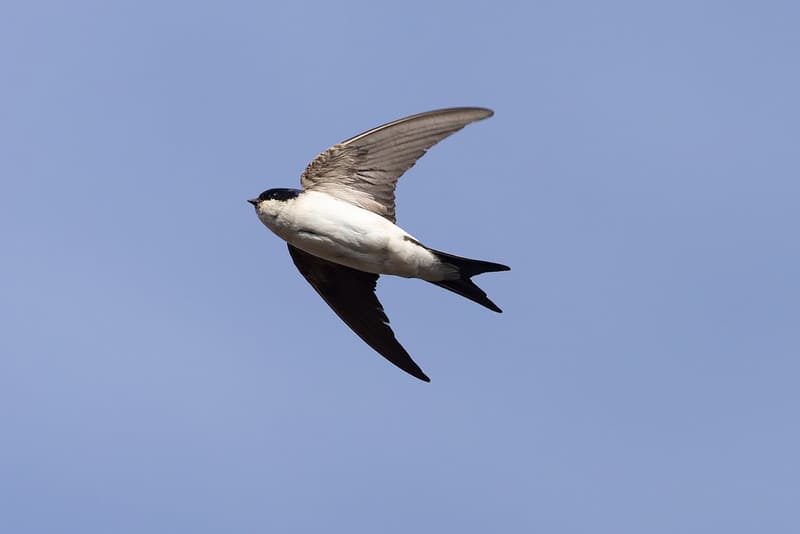
Hampshire conservation project to install 900 artificial house martin nests
Representative photo · Photo: Hobbyfotowiki / Wikimedia Commons, CC0
A major conservation effort in Hampshire is providing hundreds of free artificial nests to support the declining population of the threatened house martin bird.
A significant conservation initiative is underway in Hampshire to support the recovery of the house martin, a migratory bird currently listed as endangered on the UK's Red List. The project aims to install up to 900 artificial nest boxes, often referred to as a house martin nest, to provide these birds with a more reliable alternative to their traditional mud-based structures. Between 1995 and 2024, the UK population of this species experienced a 40% decline, a trend experts attribute to a combination of reduced insect availability and environmental challenges that hinder natural nesting.
Protecting the house martin
Each spring, these birds return from Africa to the UK to breed, typically building distinctive cup-shaped nests beneath the eaves of buildings. Constructing these homes is an energy-intensive process, requiring the birds to transport approximately 1,000 pellets of mud for each nest. However, recent years have seen increasingly hot and dry summers, which limit the availability of the wet mud necessary for construction. Furthermore, many modern residential properties feature uPVC soffits, which make it difficult for natural mud nests to adhere securely to the structure.
Following a successful pilot phase where 249 artificial cups were installed, the Hampshire House Martins Project is now expanding its reach. During the initial trial, 27 of the provided cups were occupied by the birds, a result that exceeded the expectations of the conservation team. The project is currently seeking additional homeowners, schools, and businesses to host the artificial nests. To qualify for a free installation, buildings must be situated within one kilometre of a previously recorded nesting site and feature suitable overhanging eaves at a height of four to seven metres.
Artificial nests provide a vital, robust alternative for house martins struggling to build their own homes.
Keith Betton, chair of the Hampshire Ornithological Society, noted that the initiative translates research into practical action. By providing ready-made, secure structures, the project offers a simple way for the community to assist in the recovery of the species. Residents interested in participating can submit an application through the official project website, contributing to what is believed to be the largest effort of its kind in the country.
Why it matters
The artificial nests are more durable than the mud structures the birds typically create themselves, offering a safer environment for raising young. This project directly addresses the habitat challenges faced by the species, providing a practical solution for property owners to help stabilize the population of these migratory birds.
While this specific project is localized to Hampshire, the decline of migratory species due to climate-related habitat loss is a global concern. The initiative highlights how community-led interventions can mitigate the impact of environmental changes on local wildlife.
Sources
More like this
The Wetland Conservation Legacy and the Fight Against Climate Change

COP31 opens in Turkey as climate activists demand urgent action

Senate Votes on Controversial Bipartisan Infrastructure Bill