Indira Gandhi: Shaping India’s Security Through R&AW and Smiling Buddha
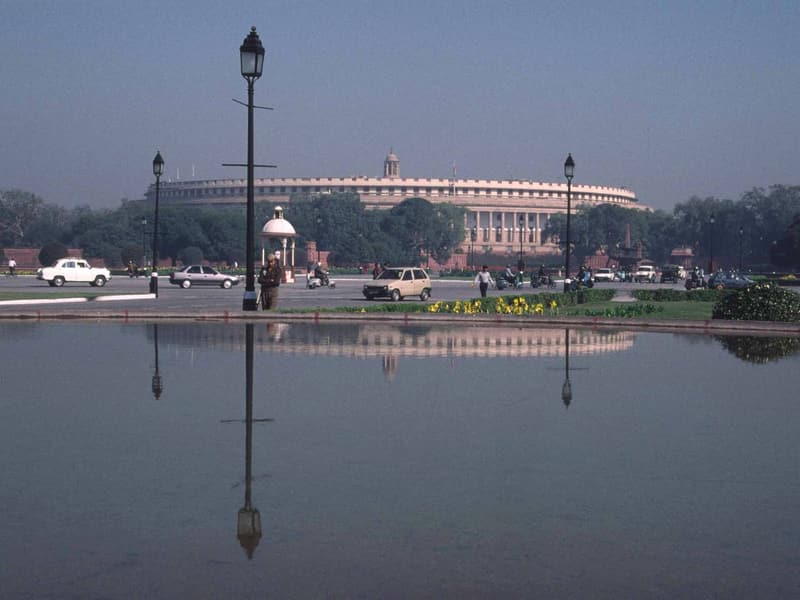
Representative photo · Photo: Bill Strong from Melbourne, Australia / Wikimedia Commons, CC BY-SA 2.0
On her birth anniversary, we examine the legacy of Indira Gandhi, whose leadership transformed India's national security architecture and geopolitical standing.
India observes the birth anniversary of former Prime Minister Indira Gandhi on November 19, remembering a leader whose decisions fundamentally altered the country's political, economic, and strategic trajectory. Born in 1917, she served as India's first and only woman Prime Minister across two distinct periods, from 1966 to 1977 and 1980 to 1984. While her political career remains a subject of intense debate, her role in establishing the Smiling Buddha nuclear test and modernizing India's security apparatus stands as a defining element of her tenure.
When Gandhi assumed office in 1966, India faced significant economic and political uncertainty. Initially underestimated by critics, she soon asserted her authority. Her domestic policy included the 1969 nationalization of 14 major commercial banks, aimed at expanding credit access for rural development and agriculture. However, her legacy also includes the contentious 1975 imposition of the National Emergency, which saw the suspension of civil liberties and the arrest of political opponents.
Indira Gandhi fundamentally reshaped India’s national security framework through institutional reforms and strategic military and nuclear achievements.
Strengthening National Security
Recognizing the intelligence gaps exposed by the 1962 war, Gandhi’s government established the Research and Analysis Wing (R&AW) in 1968. Under the leadership of Rameshwar Nath Kao, the agency provided a specialized mechanism for external intelligence and strategic decision-making. This institutional shift was complemented by India’s pursuit of nuclear capability. On May 18, 1974, India conducted its first nuclear test, the Smiling Buddha operation, at Pokhran. This milestone made India the first nation outside the five recognized nuclear-weapon states to conduct such an explosion, signaling a major leap in scientific and technological prowess despite subsequent international isolation.
Her leadership during the 1971 India-Pakistan war remains a cornerstone of her foreign policy. Following a humanitarian crisis in East Pakistan, Gandhi utilized diplomatic channels, including the Indo-Soviet Treaty, to bolster India's position. The resulting military victory led to the surrender of 93,000 Pakistani personnel and the creation of Bangladesh, cementing her status as a formidable international figure.
Why it matters
Indira Gandhi’s tenure fundamentally altered India’s strategic posture, moving the nation toward greater self-reliance in intelligence and defense. Her decisions continue to influence contemporary geopolitical discourse in South Asia, reflecting a period where India asserted its regional dominance and technological capabilities on the global stage.
Sources
More like this
Netanyahu’s Rhetoric Echoes the Atmosphere Before the Yitzhak Rabin Assassination
Israel's Opposition Bloc Faces Internal Divisions Amid Netanyahu's Maneuvering

Victorian Greens seek court injunction against independent candidate's voting cards