National Trust Takes Over Flatford Wildlife Garden
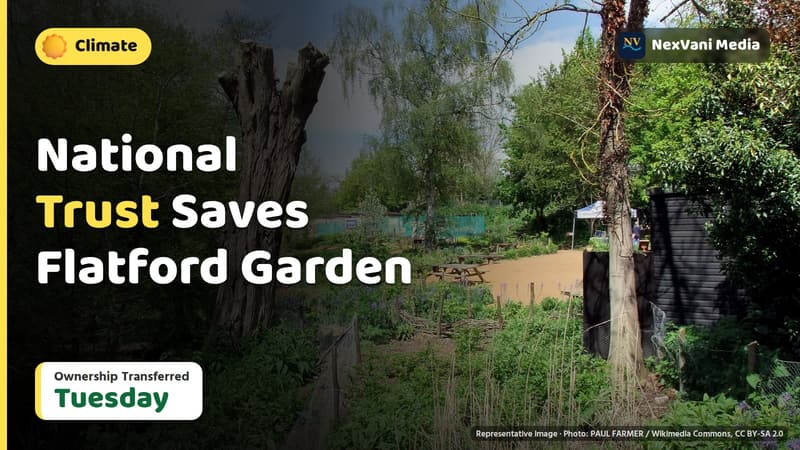
Representative image · Photo: PAUL FARMER / Wikimedia Commons, CC BY-SA 2.0
The National Trust has officially taken ownership of Flatford Wildlife Garden in Suffolk, promising to protect its character after financial pressures threatened closure.
The National Trust has stepped in to save Flatford Wildlife Garden near East Bergholt, Suffolk, after financial pressures previously placed the site's future in jeopardy. Following an announcement earlier in the year, ownership formally transferred on Tuesday. The sanctuary was originally left to the RSPB roughly fifteen years ago by Sylvia and Margaret Richardson, but financial constraints led the previous managers to consider selling or leasing the land last autumn. Officials from the conservation charity made public trust vows to preserve the unique environment while introducing minor adjustments following the acquisition.
Adam Rowlands, the RSPB area manager for Suffolk, expressed confidence that the new caretakers share identical goals regarding animal and visitor welfare. Meanwhile, National Trust area manager Leigh Freeman acknowledged that the transaction required extended preparation to secure the reserve's longevity. The property previously operated exclusively during summer months, but administrators intend to utilize the winter season to prepare the grounds for a spring reopening in March or prior to Easter.
The National Trust has officially acquired Flatford Wildlife Garden to secure its long-term future.
Preserving a Nature Legacy
The destination features diverse wildlife populations, bird species, a pond, and a trail decorated with carved wooden animals. Visitors can also explore a living willow tunnel alongside an insect and bee shelter, while educational activities cater to both children and adults. Funding and support from local organizations enabled the purchase, which incorporates adjacent land parcels alongside the main gardens. Freeman noted that the inaugural year under new management will focus on understanding visitor interactions and community integration.
Why it matters
This transition preserves an important regional wildlife habitat and ensures public access to the gardens will continue under new management. The conservation transfer affects local visitors, wildlife enthusiasts, and the community near East Bergholt by securing the long-term future of a valued natural space.
Sources
More like this
Delhi Air Quality Worsens Ahead of Diwali

Kazakhstan releases second tiger into nature reserve

Kellogg's Rice Krispies Change Recipes Due to Weather