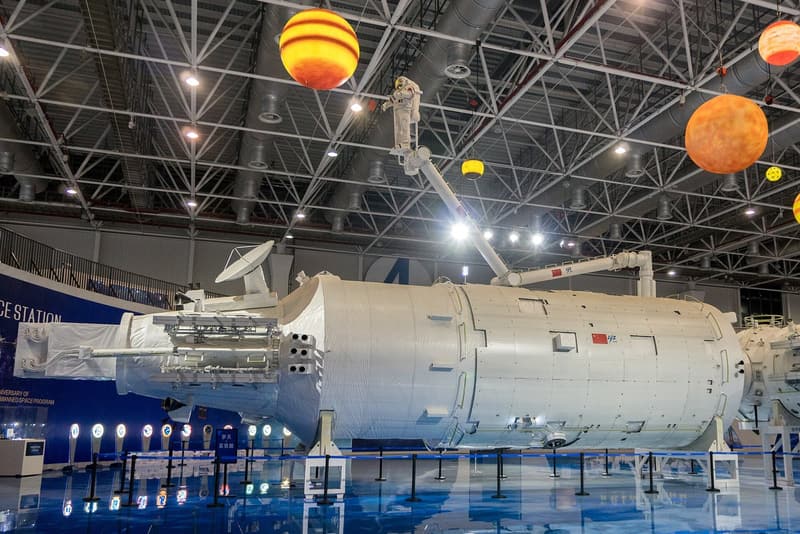
Pakistani astronaut to join China space mission
Representative photo · Photo: Shujianyang / Wikimedia Commons, CC0
China has selected a Pakistani astronaut for the Shenzhou-24 mission, making them the first foreign national to visit the Chinese space station.
China's Manned Space Agency has chosen a Pakistani astronaut to serve as a payload specialist during the upcoming Shenzhou-24 flight. State media reported that the selection forms part of bilateral cooperation under Beijing's Belt and Road Initiative, marking a notable milestone as the unnamed individual becomes the first foreign national to visit the country's space station.
While authorities have not revealed the identity of the chosen candidate or an exact departure date, the mission is expected to launch before the end of the year. Ahead of this development, Pakistani pilots Zeeshan Ali and Khurram Daud completed months of preparation at the China Astronaut Research and Training Center in Beijing. Their preparation involved practical operational exercises alongside intensive language instruction.
The broader space partnership between Pakistan and China builds upon a formal agreement signed last February, which established a Chinese government-led training initiative for Pakistani candidates. Beyond human spaceflight, the China National Space Administration plans to deploy Jinnah-1, which is Pakistan's inaugural lunar rover. Weighing thirty-five kilograms and equipped with specialized scientific instruments, this robotic vehicle will analyze plasma behavior, radiation, and lunar soil composition.
China has poured substantial resources into its space program over recent years to match the capabilities of the United States, targeting a crewed lunar landing by 2030. Meanwhile, space agencies from the US, Russia, and China are pursuing nuclear reactor projects on the Moon to power future lunar bases and facilitate resource extraction.
A Pakistani astronaut will become the first foreign visitor to China's space station.
Pakistan China space cooperation
The cooperative space efforts also align with broader international ambitions regarding lunar infrastructure. Power sources like nuclear reactors will become essential for mining frozen water located within lunar craters, potentially supplying drinking water, breathable air, and rocket propellant for deep space exploration.
Why it matters
This development strengthens the longstanding strategic and diplomatic ties between Beijing and Islamabad, elevating their partnership into crewed space exploration. For observers across South Asia, the mission highlights deepening technological collaboration between the two nations as China expands its international space alliances.
Sources
More like this

Human brain cells grown inside mice in landmark neuroscience study

Leonid Meteor Shower Lights Up Skies Across the UK This Weekend

Scientists Discover Pink Noise Is the Secret to a Better Conversation