Stablecoin contraction and bank reserve shifts highlight the stablecoin bitcoin dynamic
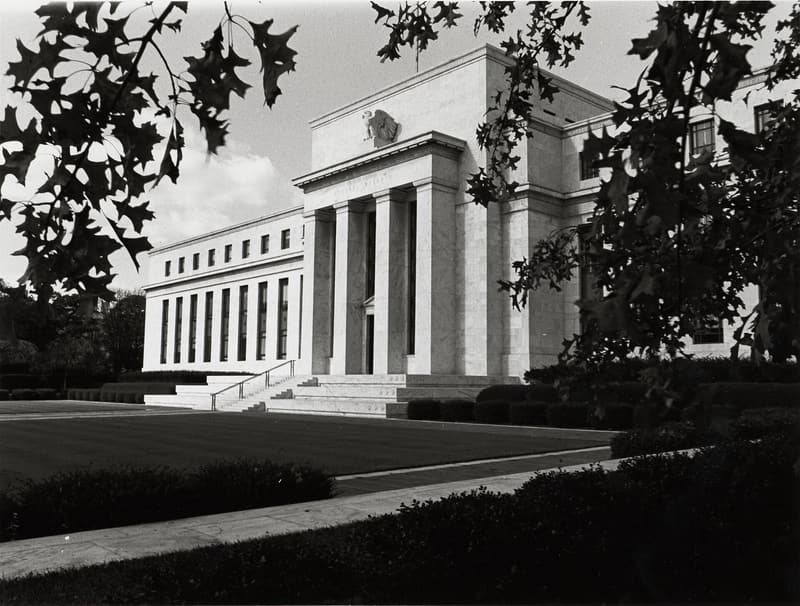
Representative photo · Photo: Federalreserve / Wikimedia Commons, Public domain
Recent Federal Reserve data reveals higher bank reserves alongside a notable decline in stablecoin circulation, coinciding with a drop in Bitcoin's price.
This is news, not investment advice. NexVani Media is not a SEBI-registered investment adviser and does not recommend buying or selling any security. Do your own research or consult a registered adviser before investing.
A recent release from the Federal Reserve shows that bank reserve balances expanded by $67.5 billion between late October and early November. Despite this increase in dollar liquidity, the development has not translated into an automatic bullish outcome for Bitcoin. Over the exact same timeframe, monitoring from data provider DefiLlama indicated that the total supply of dollar-pegged stablecoin bitcoin related token supply contracted by more than 5.7 billion units, representing a 1.91% decrease.
The divergence between rising bank reserves and shrinking token circulation creates an incomplete picture regarding a potential Bitcoin recovery. While higher settlement balances at the central bank indicate more abundant funds, those figures must ultimately turn into direct financing and active purchasing to influence digital asset prices. Meanwhile, the measured token contraction highlights a contrasting trend on the crypto side of the equation.
Data from the Fed's H.4.1 release placed total reserve balances at $2.96 trillion as of early November. During the preceding week, the Treasury General Account experienced a decrease of $79.4 billion down to $936.2 billion. Government disbursements naturally move funds into depository institution accounts, which elevates reserves, whereas incoming tax receipts and other public revenues shift funds back into the Treasury's account and work in the opposite direction. Additional shifts across other areas of the central bank's balance sheet also influenced the final reserve figures.
Rising bank reserves and falling token circulation present a complex backdrop for digital asset markets.
On the digital asset supply side, Tether's USDT series led the decline by falling 3.65 billion units, which accounted for more than 63% of the measured contraction. USD Coin followed with a circulation drop of 383 million units, while various other tracked dollar-pegged tokens collectively fell by a net 1.73 billion units. Analysts noted that the precise combination of issuer redemptions, accounting adjustments, or coverage revisions behind these reductions remains unquantified.
Following these monetary and supply shifts, Coinbase recorded a daily BTC-USD closing price of $75,969.06, marking a 5.54% drop from the previous day's close. Because this price movement occurred just after the initial reserve observation window, analysts continue to debate whether delayed liquidity effects or broader macroeconomic pressures drove the subsequent selloff.
Why it matters
The simultaneous growth of central bank reserves and reduction in dollar-pegged token supply demonstrates the complex relationship between traditional fiat liquidity and digital asset markets. Observers watching market trends must evaluate both traditional banking metrics and token availability to understand how liquidity channels influence broader crypto pricing dynamics.
Sources
More like this

Morpho loan stress exposes cbXRP positions on Base

Suspicious Nyt Poll Activity Seen in Prediction Markets

Millions Followed Kalshi Election Odds Without Placing Bets