Millions Followed Kalshi Election Odds Without Placing Bets
Illustration: NexVani Media
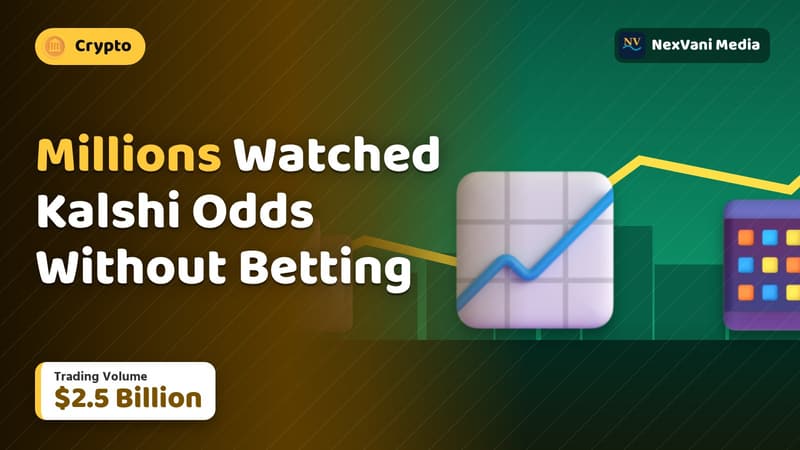
During the midterms, millions watched Kalshi without betting, as viewers significantly outnumbered active traders on the platform.
This is news, not investment advice. NexVani Media is not a SEBI-registered investment adviser and does not recommend buying or selling any security. Do your own research or consult a registered adviser before investing.
Kalshi revealed that people watching its midterm election markets outnumbered actual traders by five to one, drawing millions of spectators who did not place any financial wagers. During election week, individuals spent hours on the platform without buying anything, tracking midterm displays that featured congressional race maps and real-time percentage gauges for House and Senate control.
While hundreds of thousands of active traders monitored the platform because price shifts directly impacted their positions, the millions of casual viewers typically did not even hold accounts. Kalshi reported a post-election midterm trading volume exceeding $2.5 billion, a notable increase from the 2024 election cycle's $1.3 billion. Although the platform's exact measurement period and ratio definitions remain unverified, the figures highlight a secondary utility for prediction markets: observing political outcomes and letting participants shape expectations without risking personal funds.
Kalshi's election hub integrates market odds with fundraising figures, polling averages, and campaign news to provide multiple ways to follow a race. A standard contract trading at 65 cents pays one dollar if the candidate wins, which is often interpreted as a roughly 65 percent chance of victory, though fees and trading volume slightly alter those values. ## Understanding Millions of Viewers
Research indicates that displayed market odds can influence how observers perceive candidates. An experiment involving 1,994 registered voters demonstrated that higher market odds made respondents more likely to identify a candidate as the expected winner. However, market prices can move due to trader behavior rather than fresh information, meaning a candidate's odds might rise without any additional ballots being cast or voters interviewed.
Millions watched Kalshi election odds without placing financial bets during the midterm cycle.
While exchanges and newsrooms answer different questions—such as the Associated Press calling races strictly when trailing candidates lack a path to victory—prediction markets continue to offer a continuous stream of momentum shifts between major news developments.
Why it matters
The widespread use of prediction platforms by non-traders demonstrates that market odds have evolved into a primary tool for public information alongside traditional polls. This trend affects how everyday observers interpret political suspense and shape their expectations based on financial judgments rather than independent data alone.
Sources
More like this

Reform UK Councillor Linked to Collapsed Crypto Scheme
Nvidia Faces Tougher Post-Election Washington
Ethereum Developers Urge dApps to Test EIP-8037 Gas Changes