Jaguar Land Rover Raids BYD Offices Over Alleged Intellectual Property Breaches
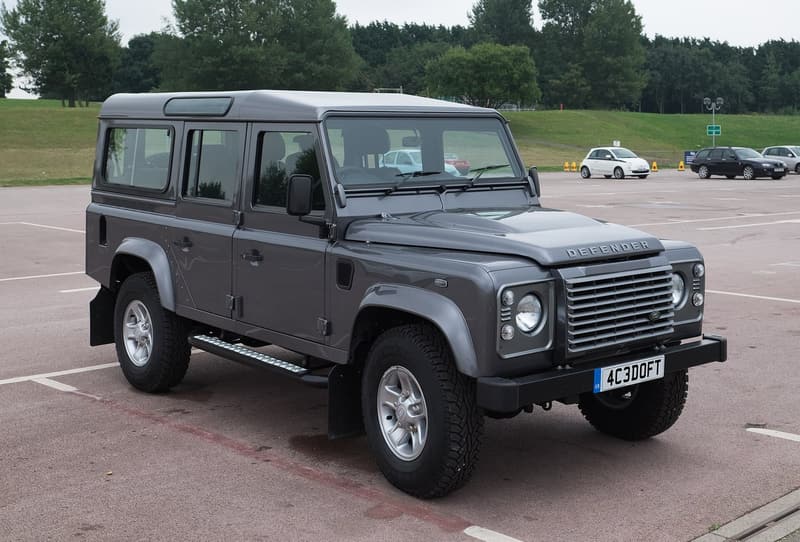
Representative photo · Photo: DeFacto / Wikimedia Commons, CC BY-SA 4.0
Bailiffs acting for Jaguar Land Rover seized digital records from BYD offices in the Netherlands ahead of a legal hearing regarding an alleged Land Rover Defender clone.
Bailiffs acting on behalf of Jaguar Land Rover (JLR) have raided the Dutch offices of the Chinese BYD carmaker as part of an ongoing intellectual property dispute. The operation, which took place in August across locations in Schiedam and Hoofddorp, involved the seizure of digital records. The action precedes a legal hearing in The Hague this week, which will determine if the Chinese BYD SUV, known as the Ti7, infringes on the intellectual property rights associated with the Land Rover Defender.
JLR seized digital records from BYD offices over claims that the Ti7 SUV copies the Land Rover Defender.
Investigating the Chinese BYD SUV
Since its debut in China last September, the seven-seat plug-in hybrid Ti7 has drawn comparisons from motoring experts to the Land Rover Defender. The vehicle is scheduled for a UK market launch in January with a price tag of £47,995, significantly undercutting the JLR Defender 110, which starts at £68,465. While BYD describes its vehicle as having an "unapologetically boxy profile" that delivers a "contemporary look," critics and industry observers have labeled it a clone. The BBC’s Top Gear magazine notably referred to the model as a "Chinese Defender clone."
Reports indicate that JLR initiated the raid to secure digital evidence, suspecting that BYD may have reverse-engineered technology used in the Ti7. JLR sought to prevent the potential destruction of these records before the court proceedings. Both JLR and BYD have declined to comment on the ongoing legal matter.
This is not the first time JLR has challenged a Chinese manufacturer over design similarities. In 2019, the company successfully concluded a three-year legal battle against Jiangling Motor Corporation to stop the sale of a copycat vehicle. However, JLR has also pursued collaborative strategies in the region, such as its 2012 joint venture with Chery, which involved licensing the Freelander brand. Despite this, other models like the Chery Jaecoo have faced scrutiny for their resemblance to Range Rover vehicles. The Jaecoo saw significant success in the UK market this October, while JLR reported a decline in quarterly Range Rover sales compared to the previous year.
Why it matters
The legal showdown highlights the ongoing tension between established automotive manufacturers and the rapid rise of Chinese competitors. For JLR, which is owned by India’s Tata Motors, protecting its design heritage is critical to maintaining its market position as a premium manufacturer.
This dispute impacts the competitive landscape in the UK and global markets, where price-sensitive consumers are increasingly turning to alternatives. The outcome of the court case will set a significant precedent for how intellectual property rights are enforced against international rivals in the evolving electric and hybrid vehicle sector.
Sources
More like this

Rise of rent-a-grandchild startups in India as population ages
Traders Priced Out of Christmas Market After Operator Change

Singapore Airlines Unveils New Boeing 777-9 Economy and Premium Economy