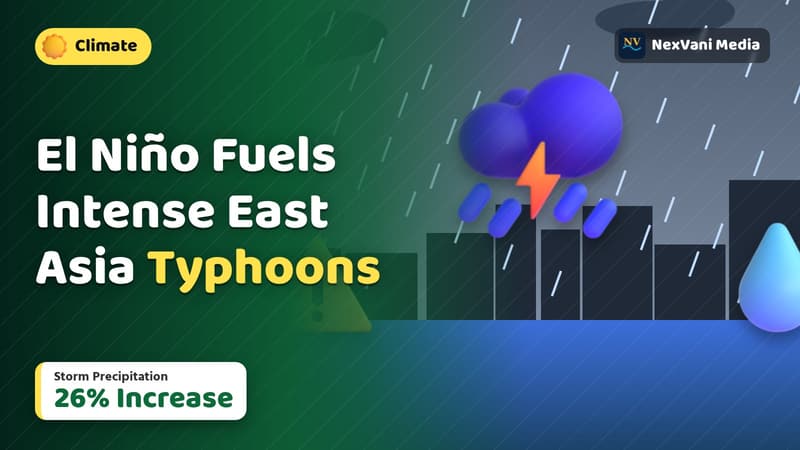
Typhoons in East Asia Intensify as El Niño Drives Record Pacific Warming
Illustration: NexVani Media
A powerful El Niño weather pattern is fueling unusually intense typhoons across East Asia, causing widespread destruction and raising concerns about long-term climate resilience.
For coastal populations in the Philippines, Taiwan, China, and Japan, extreme weather is a recurring reality. However, recent months have seen a surge in intense and unpredictable storms, with experts noting that typhoons in East Asia are becoming more frequent and severe. This shift is largely attributed to the current El Niño weather pattern, which has caused the Pacific Ocean to reach record-breaking temperatures, effectively leaving the region to contend with what meteorologists describe as a feverish climate state.
Understanding the impact of typhoons in East Asia
The current El Niño event, forecast by the UK Met Office to be the strongest in living memory, has altered wind patterns and caused storms to form further east than usual. Because these systems remain over warm waters for longer durations, they gain significant strength. The Accumulated Cyclone Energy (ACE) metric, which tracks storm intensity, suggests that this year's activity in the region could be nearly double the 30-year average. Sea surface temperatures in the equatorial Pacific recently hit 4C above normal, surpassing the previous record set in 1997.
Throughout the year, the region has faced a relentless series of weather events. In August, Super Typhoon Dolphin triggered severe flooding in China, while earlier in the year, storms forced mass evacuations in Japan and submerged villages in southern China. In October, a powerful storm system near Taiwan led to widespread flight cancellations and power outages across Hong Kong, Japan, and the Philippines, even without making a direct landfall. Climatologists have warned that these warmer conditions significantly amplify rainfall, with simulations suggesting a 26% increase in precipitation during major storms compared to historical averages.
Record-breaking Pacific temperatures driven by El Niño are intensifying typhoons, causing severe destruction across East Asia.
Governments are responding by bolstering disaster preparedness. Japan has advised citizens to stockpile essentials, while China is upgrading its monitoring systems. In the Philippines, there is a growing emphasis on climate-resilient infrastructure, as communities grapple with the annual threat of flooding and the economic impact on food production, particularly rice crops. The United Nations Development Programme has cautioned that the window for governments to build long-term resilience against these climate shocks is narrowing, noting that the severity of future impacts will depend on current investments in infrastructure and social protection.
Why it matters
The increasing frequency and intensity of these storms represent a significant challenge for regional stability. For countries across East and South East Asia, the ability to absorb these shocks is being tested, with long-term consequences for food security and public safety. As climate patterns shift, the need for proactive disaster management and robust infrastructure becomes critical for protecting vulnerable populations.
Sources
More like this

Endangered Giant Burrowing Frog Returns to Wild After Fire Rescue

Academics Urge UK to Reverse Entry Ban on Andreas Malm
depression murasu: what happened and why it matters