depression murasu: what happened and why it matters
Illustration: NexVani Media
An explainer on depression murasu, detailing the recent heavy rainfall, official alerts, and flood management across Andhra Pradesh.
What is depression murasu?
Depression murasu refers to the weather system that developed after cyclonic storm Murasu weakened into a deep depression and further into a depression over east Telangana and adjoining coastal Andhra Pradesh. Centred near Khammam and Nandigama, this system brought continuous heavy rainfall across parts of Andhra Pradesh, prompting extensive weather monitoring by meteorological departments and state officials.
Why is it trending?
With heavy rainfall lashing the region, depression murasu has become a major topic of discussion and concern across India. Continuous downpours caused significant waterlogging in cities like Vijayawada, where rain fell almost without a break from early Tuesday until evening, disrupting normal life and requiring urgent drainage measures.
What happened?
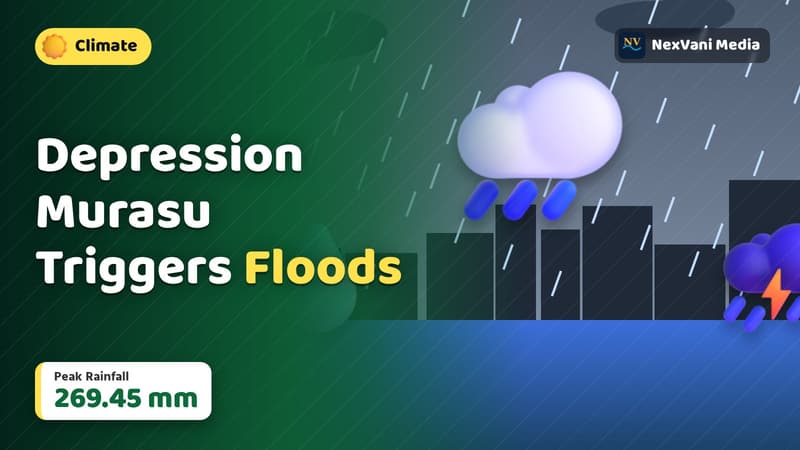
Heavy rain continued to impact several districts on Wednesday, November 4, 2026. Weather stations recorded substantial precipitation, with Edlapadu in Palnadu district receiving 269.45 mm of rain in a 24-hour period. Other areas such as Kakinada, Eluru, and Konaseema also reported high rainfall figures exceeding 50 mm at multiple weather stations.
Irrigation officials remain on high alert as depression murasu triggers heavy rainfall and swollen rivers.
Water Resources Minister Nimmala Ramanaidu held a teleconference with senior irrigation officials, directing them to remain on high alert. Authorities were instructed to continuously monitor flood flows in rivers, streams, drains, and reservoirs. The Prakasam Barrage received large inflows, with water being managed through open gates and diversion canals, while under-tunnels helped channel excess water toward the sea.
What comes next?
Authorities continue to take precautionary measures, particularly in coastal and north coastal districts, to manage rising water levels in overflowing drains like the Nallamada and Parchur streams. Officials are tasked with visiting affected zones, maintaining continuous coordination with other departments, and ensuring that rainwater accumulated in agricultural fields is drained immediately to protect crops from further damage.
Why it matters
The ongoing weather events significantly impact agricultural communities, local residents, and infrastructure across Andhra Pradesh. Swift coordination and continuous monitoring by water resources officials are vital to manage flood risks, safeguard farming operations, and prevent widespread inconvenience to the public.
Sources
More like this
Delhi Air Quality Worsens Ahead of Diwali
National Trust Takes Over Flatford Wildlife Garden

Kazakhstan releases second tiger into nature reserve