BYD SUV 7 Seater Ti7 Secures Government Approval for Australia
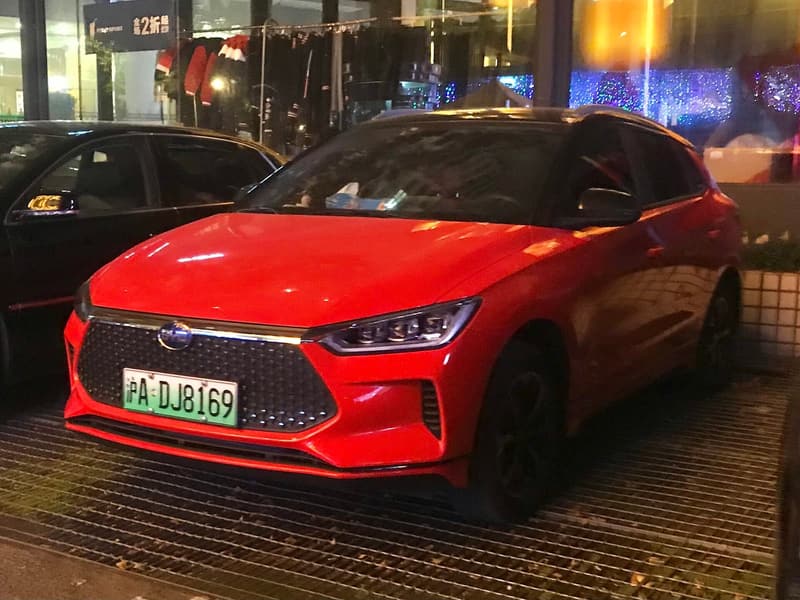
Representative photo · Photo: Jengtingchen / Wikimedia Commons, CC BY-SA 4.0
Australian regulators have granted approval for the BYD Ti7 plug-in hybrid, clearing the seven-seat family SUV for a potential market launch by 2027.
Regulatory documentation reveals that Chinese automaker BYD is advancing plans to introduce a new BYD SUV 7 seater to the Australian automotive market. The vehicle, designated as the rugged-styled Ti7 plug-in hybrid, has formally secured Australian government homologation, clearing a crucial administrative hurdle ahead of an anticipated retail rollout around 2027.
While BYD Australia has not yet officially confirmed delivery dates, government vehicle certification usually serves as one of the final procedures before commercial distribution begins. Sold domestically in China as the Fang Cheng Bao Ti7, the boxy passenger vehicle is expected to carry standard BYD badging in Australia rather than the company's upmarket Denza designation.
Australian regulators have officially approved the BYD Ti7 plug-in hybrid seven-seat SUV for local road use.
In contrast to off-road nameplates like the Denza B5 and B8 that employ rugged ladder-frame chassis construction, the Ti7 is built around a car-based monocoque architecture. This structure aligns it closely with family-oriented duties rather than heavy off-roading. The vehicle measures 5,146 millimetres long, 1,995 millimetres wide, and 1,865 millimetres high, resting on a 2,920-millimetre wheelbase. These dimensions make it substantially bigger than established competitors such as the Hyundai Santa Fe and Kia Sorento, placing its footprint nearer to the Toyota Kluger.
Features of the New BYD SUV 7 Seater
Regulatory paperwork indicates that two plug-in hybrid configurations have been approved for Australia. Both setups combine an electric motor arrangement with an internal-combustion 1.5-litre turbocharged four-cylinder petrol engine. The standard two-wheel-drive tier generates a combined 200kW, while an all-wheel-drive iteration provides 300kW. In foreign specifications, the higher-output version achieves a claimed zero-to-100km/h sprint time of 4.8 seconds.
Official battery details for Australian-bound models are still unannounced. In the United Kingdom, the vehicle packs a 35.6kWh battery yielding up to 119 kilometres of pure electric driving based on the WLTP standard, whereas the Chinese market offers an optional 50kWh pack rated at up to 315 kilometres under the CLTC testing cycle. Overseas variants are outfitted with a 15.6-inch central touchscreen, a 10.25-inch digital driver display, tri-zone climate regulation, a panoramic sunroof, and vehicle-to-load bidirectional charging capabilities. While UK retail pricing opens at £47,995, local Australian pricing is anticipated to land significantly lower when sales commence.
Why it matters
The regulatory clearance of the Ti7 brings a formidable new competitor into the large family SUV segment, directly challenging established stalwarts like the Hyundai Santa Fe and Kia Sorento.
The development highlights the accelerating expansion of Chinese automotive brands in Western markets. Having expanded significantly from minimal market shares in overseas territories to overtake traditional competitors, BYD's broadening model range demonstrates how alternative-powertrain family vehicles are reshaping conventional market segments.
Sources
More like this
Astley residents face sleep deprivation over giant warehouse

Indoor soft play centres face uncertain future amid seasonal struggles
Starbucks Expansion Plans Include 7,500 Jobs and 500 New UK Outlets