Ethereum Devs Delay Glamsterdam Hoodi Fork Over Security Concerns
Illustration: NexVani Media
Ethereum core developers have paused the Glamsterdam upgrade on the Hoodi testnet following concerns raised regarding smart contract invariants.
This is news, not investment advice. NexVani Media is not a SEBI-registered investment adviser and does not recommend buying or selling any security. Do your own research or consult a registered adviser before investing.
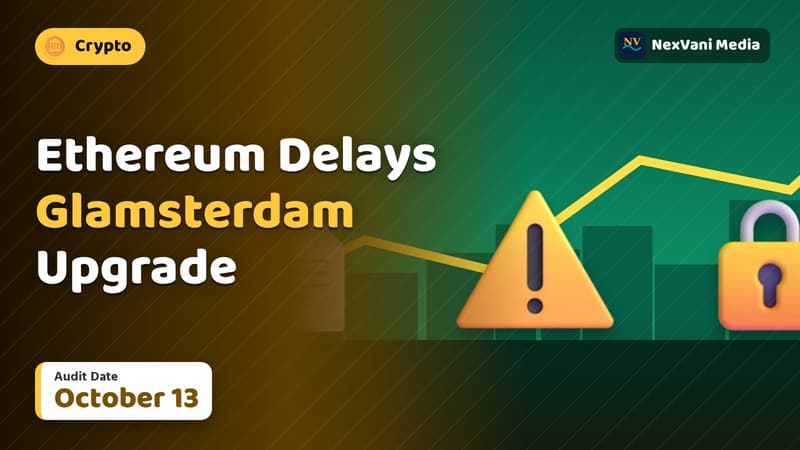
Ethereum core developers have delayed the implementation of the upcoming ethereum glamsterdam upgrade on the Hoodi testnet while they investigate security concerns tied to eight smart contract invariants associated with EIP-8037 and EIP-8038. According to a Friday blog post from the Ethereum Foundation, the decision to postpone the testnet fork was made to address potential vulnerabilities that could impact existing decentralized applications.
The pause follows a report published on October 13 by smart contract auditor ChainSecurity. The audit revealed that the two specific Ethereum Improvement Proposals could potentially break smart contracts that depend on fixed gas-related assumptions when external calls encounter failures. Certain existing projects currently rely on the assumption that specific operations will incur a predetermined cost in gas, an expectation that would be invalidated by the proposed changes to how gas is charged for those operations.
Ethereum core developers paused the Glamsterdam upgrade on the Hoodi testnet over smart contract security concerns.
Delaying the fork on the Hoodi testnet provides developers with additional time to thoroughly identify potential issues within the smart contracts and evaluate whether modifications are necessary before the Glamsterdam upgrade moves further along the path toward mainnet deployment. The Ethereum Foundation confirmed that the Hoodi testnet fork will remain on hold until all identified issues are fully resolved. Previously, the upgrade went live on the Sepolia testnet on October 6 as part of its final major testing phase.
Why it matters
The postponement affects how developers prepare applications for the network upgrade, emphasizing the critical role of rigorous security auditing prior to mainnet deployments. By pausing the upgrade process on the testnet, the development community prioritizes network stability and contract integrity over speed, ensuring that breaking changes regarding gas mechanics are properly addressed.
Sources
More like this

Cheap online services routed web traffic through White House network

NYSE-Backed Crypto Venture Faces 90% Stock Rejection Amid Liquidity Hurdles
Binance Security Incident Linked to Months of Prior Access