Productivity Gains May Counteract Inflation Concerns Impacting Higher Bitcoin Value
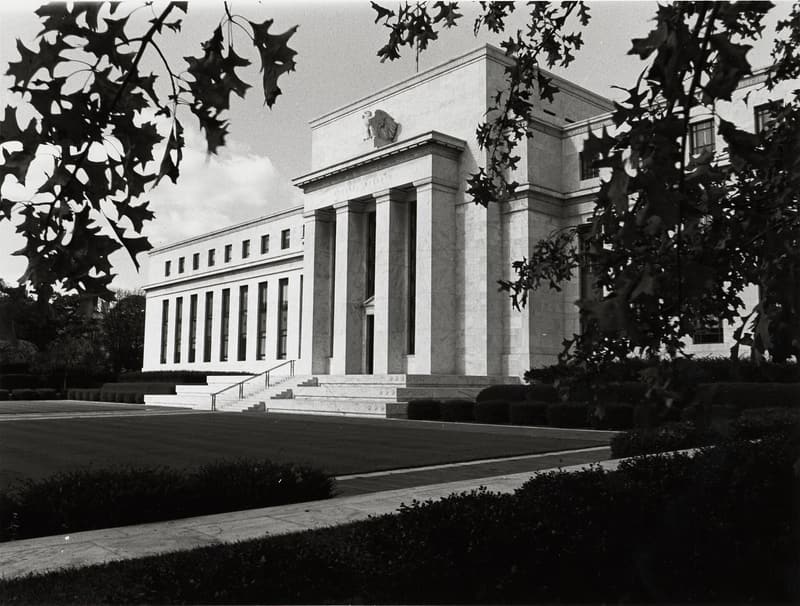
Representative photo · Photo: Federalreserve / Wikimedia Commons, Public domain
Preliminary third-quarter data shows rising productivity could offset labor costs, potentially easing rate pressures that influence the market for assets like Bitcoin.
This is news, not investment advice. NexVani Media is not a SEBI-registered investment adviser and does not recommend buying or selling any security. Do your own research or consult a registered adviser before investing.
Recent economic data suggests that the relationship between wage growth and inflation may be more nuanced than previously assumed, a development that could influence the market for assets seeking a higher Bitcoin value. According to preliminary figures from the Bureau of Labor Statistics released on November 5, nonfarm business productivity rose by 3.6% in the third quarter. This increase was driven by a 3.7% growth in output, which significantly outpaced a 0.1% rise in hours worked.
Understanding the link to higher bitcoin value
Because each hour of labor produced more output, businesses were able to increase hourly compensation by 2.9% while simultaneously seeing unit labor costs fall by 0.7%. Unit labor costs are calculated by dividing hourly compensation by productivity. When productivity gains are strong, companies can afford to pay workers more without necessarily passing those costs on to consumers through higher prices. This dynamic offers a potential counterpoint to concerns that recent employment reports, which showed significant payroll growth, would automatically trigger inflationary pressure.
While the October employment report indicated that private nonfarm payrolls increased by 165,000 and hourly earnings rose by 0.4% monthly, analysts note that these figures cover different periods and metrics than the third-quarter productivity report. The Federal Reserve continues to monitor these trends closely. During its October 28 meeting, the Federal Open Market Committee maintained its target interest rate range at 3.75% to 4.00%. The committee acknowledged strong productivity growth while still characterizing inflation as elevated, illustrating the ongoing policy tension.
Rising productivity allows businesses to increase wages without necessarily driving up unit labor costs or inflation.
For investors, the implications center on the financing channel. Expected short-term interest rates influence longer-term borrowing costs and the relative attractiveness of various assets. If improved productivity helps cool inflation, it could potentially ease the pressure of high interest rates, which often act as a headwind for digital assets. However, this remains speculative, as persistent inflation or upward revisions to labor costs could weaken the case for such relief.
Why it matters
The ability of the economy to sustain productivity gains is a critical factor for the Federal Reserve’s future interest rate decisions. If productivity growth offsets wage increases, it may provide the central bank with more flexibility regarding monetary policy. For those tracking the global financial landscape, including participants in India and South Asia, these shifts in U.S. labor costs and inflation expectations are significant, as they influence global liquidity and the cost of capital for various investment classes.
Sources
More like this

Bitcoin Traders Could Misinterpret Binance Data Change

Every Magnificent Seven Stock Opts Out of OKX-ICE Venue

Wall Street blocks tokenized shares, but stock perps remain available