Ten Years of the Paris Agreement: Has the World Kept Its Climate Promises?
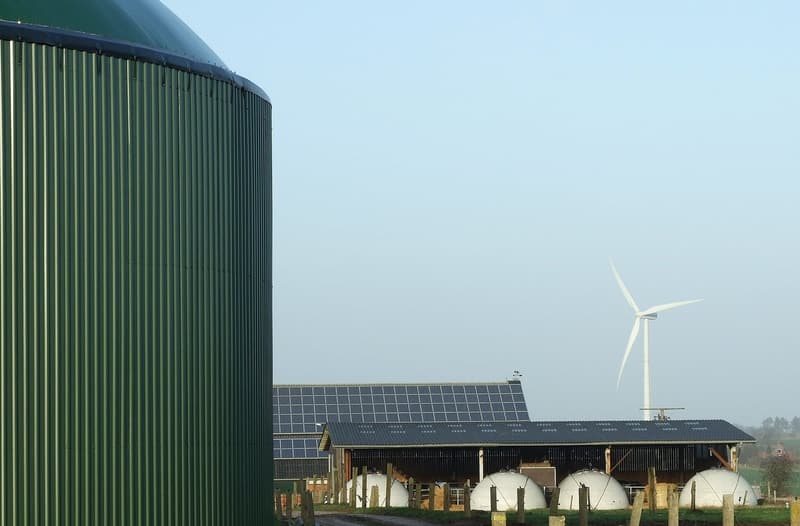
Representative photo · Photo: Florian Gerlach (Nawaro) / Wikimedia Commons, CC BY-SA 3.0
A decade after the Paris Agreement, global temperatures are rising and emissions remain high, despite significant growth in clean energy investments.
As the world marks ten years since the Paris Agreement, many are asking if we have made enough progress on the "ten paris" climate goals. Adopted on December 12, 2015, at the COP21 summit, this legally binding treaty brought together 196 parties to limit global temperature rises to well below 2 degrees Celsius, with a target of 1.5C. While the agreement has successfully spurred stronger climate policies and a massive expansion in renewable energy, the reality of the past decade shows that global emissions are still 9 percent higher than they were in 2016.
Global warming is accelerating as current policies remain insufficient to meet the 1.5C target.
Assessing the progress
Today, 194 parties, including 193 countries and the European Union, remain committed to the framework. The agreement functions through nationally determined contributions (NDCs), where each government sets its own targets for emission reductions and adaptation. These goals are reviewed every five years during a Global Stocktake. However, the treaty relies on transparency and international pressure rather than enforcement, and progress has stalled since 2021.
The United States, a major historical emitter, has experienced political volatility regarding its participation. Under the Trump administration, the country withdrew twice, with the most recent exit occurring in January of this year, after having rejoined under President Joe Biden in 2021. Meanwhile, China remains the world's largest emitter, with its emissions, alongside those of India and Indonesia, continuing to rise as these economies rely on coal to meet energy demands. Although countries like Germany, Japan, and the US have reduced emissions by pivoting toward renewables and gas, these gains have been offset by growth elsewhere.
The warming reality
Climate data indicates that the past three years, 2023 to 2025, were the hottest on record. For the first time, a full calendar year in 2024 exceeded 1.5C of warming above preindustrial levels. According to the UN Environment Programme, the window to prevent overshooting the 1.5C limit has likely closed. While projected warming for 2100 has dropped from 3.6C to 2.6C due to policy shifts, the world is still far from the necessary cuts to keep the 1.5C goal within reach.
Why it matters
Every fraction of a degree of warming beyond 1.5C increases the frequency and intensity of deadly floods, heatwaves, and wildfires. This shift affects nearly every nation, including those in South Asia, where fast-growing economies are balancing rising energy needs with the urgent requirement to reduce reliance on coal and fossil fuels to mitigate climate risks.
Sources
More like this

Warming seas threaten key phytoplankton species and marine food webs

Violent Tornado Strikes Brazilian Airport, Suspending Operations
Typhoons in East Asia Intensify as El Niño Drives Record Pacific Warming