
Democrats to Challenge Trump Foreign Policy After Democratic Controlled Congress Win
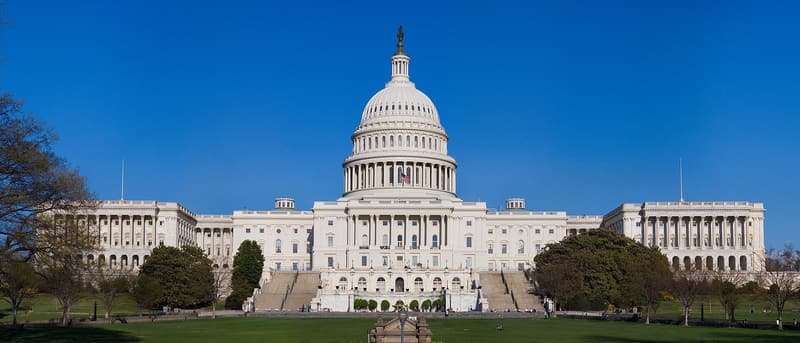
Representative photo · Photo: Noclip / Wikimedia Commons, Public domain
Democrats have secured majorities in both houses of Congress, setting the stage for intense battles over President Trump’s foreign policy, including the war in Iran and international tariffs.
Following a midterm election described as a generational wipeout for Republicans, Democrats are set to take control of both houses of Congress. This shift in power creates a new landscape for President Donald Trump, who faces a Democratic controlled Congress that is expected to challenge his foreign policy agenda. The election results have been widely attributed to voter dissatisfaction with inflationary pressures linked to international tariffs and the ongoing war in Iran.
Democrats will use their new congressional majority to challenge Trump's foreign policy and budget priorities.
Internal divisions within the Republican party have surfaced immediately following the results. Vice-president JD Vance publicly linked the party's losses to the war in Iran, a sentiment supported by Donald Trump Jr. While President Trump acknowledged that the conflict contributed to rising gasoline prices, he maintained that the military action is necessary to prevent Iran from acquiring nuclear weapons. He indicated that he might continue or even increase strikes in the coming months, feeling less constrained by voter backlash now that the midterms have concluded.
Challenging the Executive Branch
While Democrats hold majorities in both chambers, they lack the numbers to override a presidential veto. Consequently, the primary strategy for the opposition will involve leveraging Congress’s control over the federal budget. Former diplomat Ryan Crocker noted that the Pentagon's request for increased funding for the Iran conflict will likely become an early battleground. Democrats may attempt to insert restrictive language into upcoming spending bills or the National Defense Authorization Act to limit the president's authority.
However, experts warn that this approach carries risks. Attempting to shut down the government or overplaying their hand could alienate voters who are already weary of political instability. Furthermore, historical precedent suggests that restraining a president on foreign policy is difficult. Even when Congress has passed bipartisan resolutions, such as those invoking the War Powers Act, President Trump has previously utilized his veto power to maintain his course.
Why it matters
The shift in power creates a complex environment for U.S. foreign policy. While Democrats may launch investigations into military contracts or the conduct of the war, their ability to force substantive policy changes remains uncertain. The administration retains significant executive power over intelligence sharing, satellite services, and military aid, which are not easily constrained by legislative oversight alone.
This election has also altered the status quo for political alliances, particularly regarding Israel. As some Democrats push for stricter conditions on military aid, the Israeli government faces its most significant diplomatic challenge in decades. The coming months will reveal whether congressional investigations can evolve into concrete constraints on the White House.
Sources
More like this

Ministers target ministers and e-bikes over blocked pavements

New Zealand braces for a knife-edge election: What you need to know

High Court to Hear Pauline Hanson Appeal in Racial Discrimination Case
