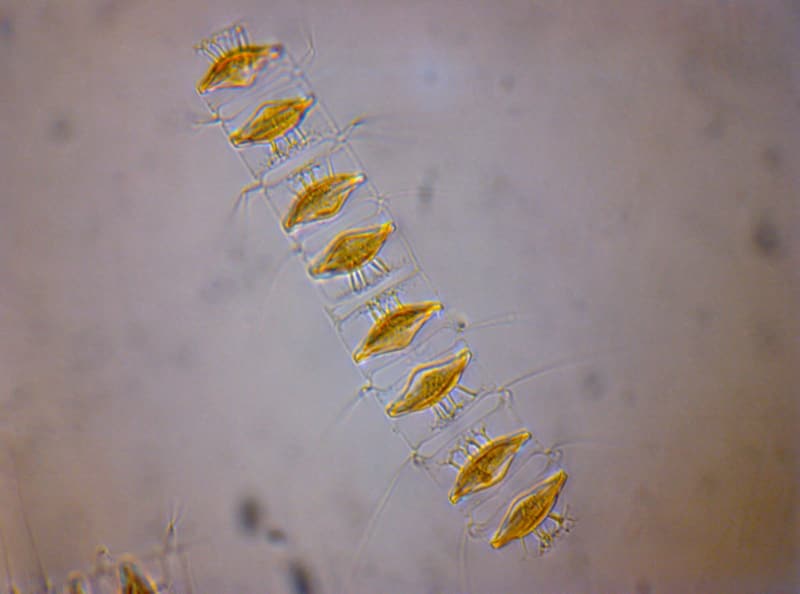
Warming seas threaten key phytoplankton species and marine food webs
Representative photo · Photo: Richard A. Ingebrigtsen, Department of A / Wikimedia Commons, CC BY 3.0
A four-year study warns that rising ocean temperatures could destabilise marine food webs, potentially jeopardising food security by 2050.
A comprehensive four-year study has revealed that warming seas threaten key phytoplankton species and the broader stability of marine ecosystems around the UK and the north-east Atlantic. Researchers from an international team, led by the Centre for Environment, Fisheries and Aquaculture Science (Cefas), warn that these changes could fundamentally reshape marine biodiversity in ways previously unforeseen, potentially endangering food security by 2050.
While previous assumptions suggested that rising temperatures might increase overall biodiversity in middle latitudes, the new findings challenge this view. The study, published in Science Advances, utilised advanced machine-learning techniques and long-term datasets to project the impact of climate change. The results indicate a significant predator-prey imbalance: while fish and seabed invertebrate diversity could rise by approximately 12% by mid-century, essential plankton groups are expected to decline.
Warming seas could destabilise marine food webs and jeopardise global food security by 2050.
Understanding the marine climate hotspot
The seas surrounding the British Isles, particularly the southern North Sea, are identified as marine climate hotspots, ranking among the 20 fastest-warming regions globally over the past 50 years. Under a projected scenario of 3C of warming by 2100, the researchers found that phytoplankton and zooplankton diversity could fall by 3% and 7% respectively by 2050. This shift creates a scenario where predators may increase while their primary food sources diminish.
Elena Couce, a marine ecologist at Cefas and co-lead author, noted that the research highlights how climate change reshuffles biodiversity unevenly. While some fish species, such as anchovies and seabass, may thrive as they move into warming waters, others like Atlantic cod and haddock face less suitable conditions. This uneven distribution means that gains in certain groups do not necessarily translate to a more resilient ecosystem.
Researchers have shared these findings with the government’s review of marine protected areas to assist in fishery management. The study serves as an early warning system, suggesting that policymakers must account for these shifting biodiversity patterns when developing future environmental strategies.
Why it matters
The destabilisation of marine food webs poses a significant risk to ocean health and long-term food security. By identifying which parts of the ecosystem are most vulnerable, this research provides a critical framework for managing marine resources amidst a rapidly changing climate.
Sources
More like this
Violent Tornado Strikes Brazilian Airport, Suspending Operations
Typhoons in East Asia Intensify as El Niño Drives Record Pacific Warming
Endangered Giant Burrowing Frog Returns to Wild After Fire Rescue