Delhi AQI Hits 524 While Other Cities Dominate World India Ranking
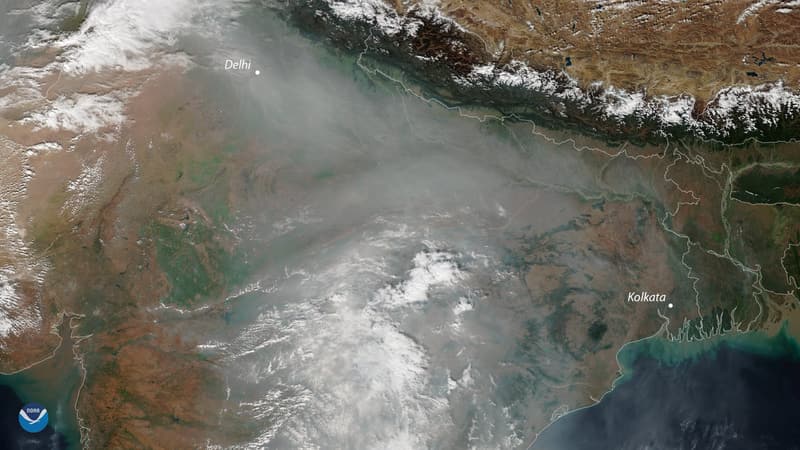
Representative photo · Photo: NOAA / Wikimedia Commons, Public domain
Delhi's air quality remains hazardous ahead of Diwali, yet the capital sits outside the top ten in a new world India ranking of polluted places.
Air quality across the national capital remained deeply concerning on Friday morning, as monitoring data showed readings entering hazardous territory. While local metrics drew widespread attention, a broader look at the world india ranking placed the territory outside the ten most affected locations globally, pointing to severe conditions across the wider northern territory.
Data published by AQI.in showed the capital registering an air quality index of 524 during the morning hours. Despite these severe figures, the locality positioned sixteenth on a global compilation of the twenty most affected spots. The highest readings were logged in Meerut, followed closely by Hapur, Hisar, and Bathinda. Every single entry on this twenty-spot roster came from Uttar Pradesh, Haryana, and Punjab, illustrating a widespread crisis extending far beyond the metropolitan limits.
Northern India faces severe pollution as multiple states dominate global rankings ahead of Diwali.
The current crisis arrives days ahead of Diwali, with regional metrics already surpassing observations recorded during the same festival period last year. Previous records showed average readings climbing significantly following the celebrations, but current numbers have already breached four hundred well before the festivities begin.
Understanding the Factors Behind Regional Air Pollution
Atmospheric deterioration is being driven by multiple contributing sources, including vehicular emissions, industrial output, road dust, and crop stubble burning across neighbouring states and a bordering nation. Satellite observations have tracked smoke moving across international boundaries toward domestic locations.
Meteorological conditions have further compounded the issue. Stable atmospheric layers and minimal ground-level wind speeds prevent pollutants from dispersing, trapping hazardous particulate matter near the surface. Authorities have highlighted fine particulate matter, specifically PM2.5, as a primary hazard capable of penetrating deep into human respiratory systems.
Why it matters
The widespread severity of air pollution affects millions of residents across northern states, posing serious health risks as pollutant levels exceed last year's pre-festival benchmarks. This developing situation impacts public health management and underscores the challenge of curbing multi-source emissions throughout the region.
Sources
More like this

Ten Years After Paris Agreement, Are Climate Talks Making Any Progress?

Famous New Mexico Rock Formation Destroyed After Heavy Rains

Understanding What Paris Agreement Means for Global Climate Targets