New theory suggests ancient British ruler who urged Roman invasion was a queen
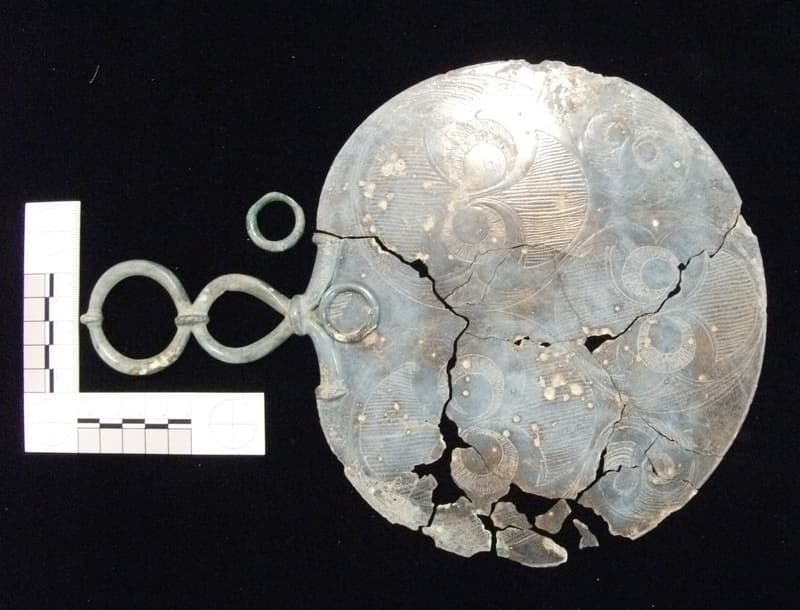
Representative photo · Photo: The Portable Antiquities Scheme, Emma Tr / Wikimedia Commons, CC BY-SA 4.0
An academic claims that Verica, the tribal leader who persuaded Emperor Claudius to invade Britain in AD43, may have been a woman rather than a king.
A fresh academic theory suggests that the ancient leader who convinced Emperor Claudius to launch the Roman invasion of Britain in AD43 was actually a queen rather than a king. The provocative conclusion comes from Dr Miles Russell, who directs archaeological fieldwork at Bournemouth University. According to Russell, rethinking this historical figure could significantly alter our understanding of the politics and social dynamics of Iron Age Britain.
Verica ruled over the Atrebates tribe, governing territories that encompass parts of modern-day Hampshire and West Sussex. Following the death of tribal leader Cunobelinus and the subsequent rise of his son Caratacus, Verica faced exile and sought refuge with Claudius in Rome. Without this intervention, historians note, the Roman conquest might never have occurred.
Russell points to several pieces of linguistic and numismatic evidence to support the idea that Verica was female. For instance, Latin names ending in the letter 'a' frequently designated women. Additionally, the term 'rex' was utilized on coins to denote reliable allies on the periphery of the Roman empire. Russell argues that this title did not specify gender, unlike 'regina' or 'regis', and notes that coin imagery featured a naked figure on horseback that appeared distinct from the overtly male depictions used by contemporary rulers like Caratacus and Cunobelinus. Furthermore, abbreviated Latin inscriptions commonly translated as 'son of' could alternatively mean 'daughter of'.
Verica may have been a queen who changed British history by prompting the Roman invasion.
Debate among experts
The hypothesis has met with skepticism from other specialists in the field. Professor Roger Tomlin of the University of Oxford noted that male Latin names could end in 'a', though he acknowledged that the masculine form 'vericus' offered the strongest support for a feminine reading. Tomlin also questioned whether 'rex' applied equally to female rulers and argued that bare-breasted figures on currency did not confirm the ruler's sex. Dr Daphne Nash Briggs, a specialist in Iron Age coinage, added that certain coins appeared to display a male portrait with an Adam's apple or a male priestly dress.
Russell acknowledges that his proposition will generate debate, noting that challenging long-held historical narratives is essential for progress.
Why it matters
This ongoing debate touches directly upon how historians understand ancient power structures and leadership. For readers exploring history kings and queens, the proposition demonstrates how newly interpreted numismatic and textual evidence can challenge centuries-old assumptions about gender and politics in the ancient world.
Sources
More like this

Historic Sites Including Norman Conquest Castle Added to Heritage at Risk Register

France braces for nationwide strikes and protests over living costs

Chef Sacked for Refusing Pineapple on Pizza Loses Bid to Reclaim Job