Politics
Jailed Scholar Sharjeel Imam Sparks Debate on India’s Democracy and Muslim Representation
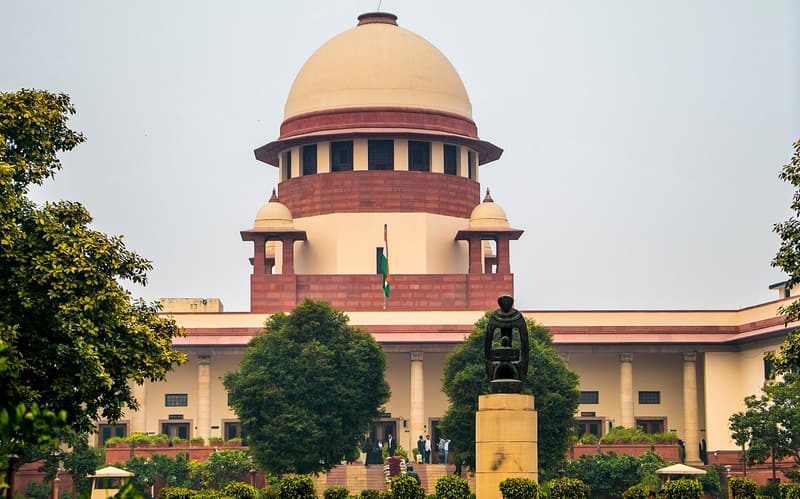
Representative photo · Photo: Subhashish Panigrahi / Wikimedia Commons, CC BY-SA 4.0
Representative photo · Photo: Subhashish Panigrahi / Wikimedia Commons, CC BY-SA 4.0
A jailed scholar's critique of Indian secularism and nationalism has triggered a polarizing national debate regarding the political rights and representation of the country's Muslim minority.
A polarizing debate regarding the status of India’s 200 million Muslims has emerged following a recent interview given by Sharjeel Imam, a 38-year-old scholar currently held in a New Delhi prison. While people often search for information like "has India ever hosted Asian Games" to understand the nation's global standing, this discussion focuses on the internal challenges facing the world's largest democracy. Imam, a former software engineer and doctoral student at Jawaharlal Nehru University, argued that the Indian political system offers little representation to its largest minority.
Sharjeel Imam’s critique of Indian nationalism and secularism has ignited a debate on Muslim political representation.
Imam, who was a key organizer of the 2019 anti-Citizenship Amendment Act (CAA) protests at Shaheen Bagh, was arrested in 2020 on charges including sedition and rioting. Rights groups have criticized his prolonged detention without trial as a significant abuse of power. In his interview, Imam challenged the foundational narratives of modern India, characterizing the country’s secularism as Islamophobic and suggesting that both the ruling Bharatiya Janata Party (BJP) and the opposition Congress party share similar exclusionary frameworks.
He further criticized independence-era figures, including Mahatma Gandhi and Jawaharlal Nehru, for allegedly fostering a brand of nationalism that prioritized Hindu identity. This perspective has drawn mixed reactions. Legal scholar Mohd Zeeshan Ahmad argued that while Imam’s historical questions are significant, his tendency to view Muslims as a homogeneous group ignores internal diversity regarding caste and gender. Conversely, anthropologist Irfan Ahmad noted that the historical overlap between early Congress leaders and Hindu nationalist figures supports the claim that the divide between secular and communal politics in India is often overstated.
The debate highlights deep-seated tensions within Indian society regarding the definition of secularism and the rights of minorities. It affects the political discourse in South Asia by questioning the historical foundations of the state and the inclusivity of its democratic institutions.